Introduction
What if you could transform hesitant speakers into confident conversationalists with just one resource?
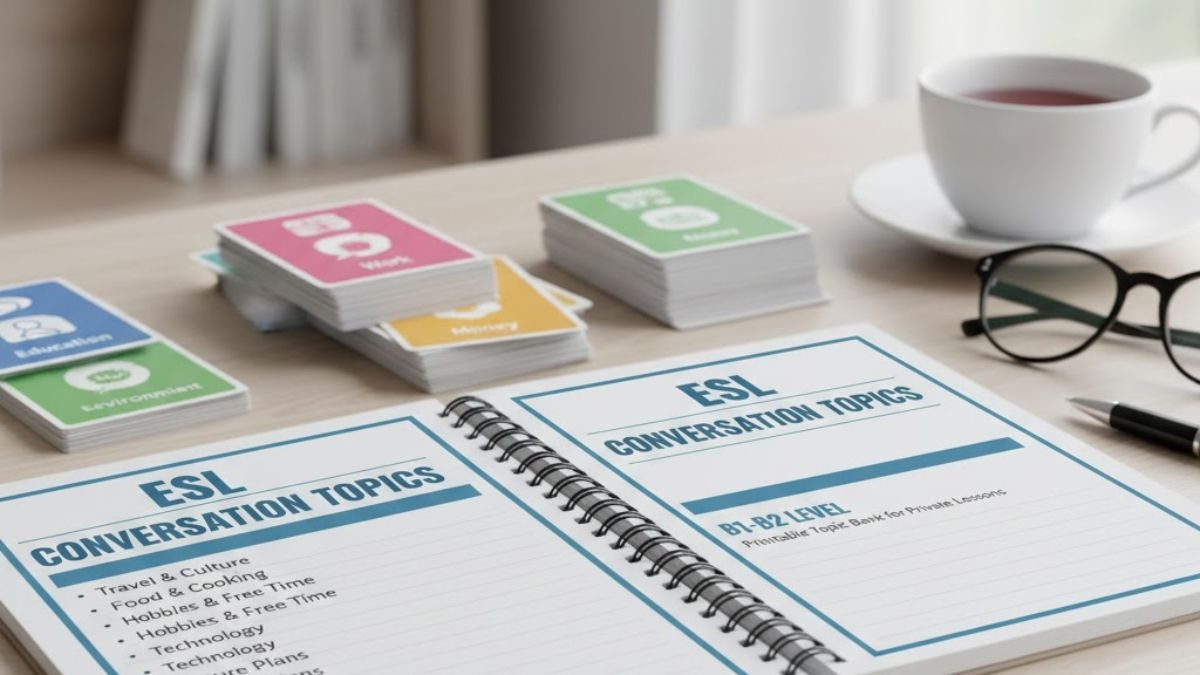
Many tutors struggle to find engaging materials that spark meaningful dialogue. This comprehensive printable bank of ESL Topics for Conversation solves that challenge perfectly.

It offers hundreds of carefully curated themes for intermediate learners. Each subject promotes natural language use beyond simple answers.
The alphabetical organisation makes finding relevant discussions effortless. You will discover everything from daily life to global issues.
Every topic includes printable PDF handouts with thought-provoking questions. These materials save preparation time while enhancing lesson quality.
This resource has evolved over several years through practical classroom use. It continues to grow with fresh content for diverse interests.
Private tutors can adapt these discussions for various contexts. They work wonderfully with friends, family members, or work colleagues too.
Key Takeaways
- Hundreds of alphabetically organised themes facilitate easy navigation
- Printable PDF handouts for each topic reduce preparation time significantly
- Developed through years of practical experience with continuous expansions
- Promotes meaningful communication practice beyond basic yes/no responses
- Adaptable for various contexts including informal settings with friends or family
- Builds learner confidence and proficiency through engaging relevant discussions
- Covers diverse interests from everyday situations to broader global issues
Introduction to This ESL Conversation Topics Resource
The journey from intermediate to advanced speaking requires precisely targeted practice materials. This comprehensive resource provides exactly that support for both tutors and learners.
The Value of Targeted Conversation Practice for B1-B2 Learners
Intermediate students often plateau after mastering basic exchanges. They need opportunities to express complex thoughts and opinions.
Structured discussion practice builds both confidence and fluency. Learners develop the ability to navigate real-world conversations rather than simple question-answer patterns.
The carefully designed questions prevent yes/no responses. Instead, they encourage extended discourse and personal reflection.
This approach transforms speaking practice from mechanical repetition to genuine communication. Students engage with subjects that matter to them personally.
How This Printable Topic Bank Enhances Private Tutoring
Private tutors benefit tremendously from ready-to-use materials. The printable format saves valuable preparation time while maintaining quality.
Each topic includes thought-provoking questions that stimulate meaningful dialogue. Tutors can select subjects that match their student’s interests and goals.
The resource allows for complete flexibility in lesson planning. Sessions can focus on personal experiences, cultural issues, or hypothetical scenarios.
Both in-person and online tutoring sessions benefit from these materials. The printable handouts provide structure while allowing spontaneous discussion to develop naturally.
Ultimately, this resource empowers tutors to create engaging, effective speaking practice. Students develop their skills through relevant, interesting conversations that mirror real-life interactions.
Exploring the Core ESL Topics for Conversation
Effective language practice hinges on engaging subjects that stimulate authentic communication. The printable resource organises hundreds of themes into logical categories. This structure helps tutors quickly identify suitable discussions for each student’s needs.
Three main groupings form the foundation of this comprehensive collection. Each category serves distinct pedagogical purposes while promoting natural dialogue.
Everyday Life and Personal Experiences
Relatable subjects form the bedrock of confident speaking practice. These themes encourage personal sharing and build comfort with familiar vocabulary.
Common examples include family dynamics, culinary preferences, and domestic routines. Students discuss their actual experiences rather than abstract concepts.
This approach makes language practice immediately relevant. Learners describe their own lives while expanding vocabulary organically.
| Topic Category | Example Subjects | Language Focus |
|---|---|---|
| Personal Life | Family, Home, Daily Routines | Present tenses, descriptive adjectives |
| Preferences | Food, Hobbies, Entertainment | Expressing likes/dislikes, comparatives |
| Personal History | Childhood, Education, Travel | Past tenses, narrative structures |
Global Issues and Cultural Discussions
Broader themes challenge students to consider wider perspectives. These subjects introduce specialised vocabulary while encouraging critical thinking.
Environmental concerns, social justice matters, and international affairs feature prominently. Each topic prompts examination of different viewpoints and cultural contexts.
According to resources from settlement organisations, discussing global issues helps learners understand Canadian values while maintaining cultural connections.
Country-specific comparisons prove particularly valuable. Students contrast traditions, social structures, and environmental approaches between nations.
Hypothetical Scenarios and Abstract Concepts
Imaginative questions push learners beyond concrete reality. These exercises develop flexibility with conditional structures and speculative language.
“What if” situations, future predictions, and philosophical questions feature in this category. Students practice complex grammatical forms while expressing creative ideas.
Abstract concepts like time, justice, or happiness challenge intermediate speakers. They must articulate nuanced thoughts without concrete references.
This category proves especially effective for stretching language abilities. Learners tackle sophisticated ideas that require precise vocabulary and grammatical control.
The three categories work together to provide comprehensive speaking practice. Tutors can mix themes from different groups within single sessions.
This variety maintains student engagement while addressing multiple learning objectives. Each conversation becomes an opportunity for meaningful language development.
Effective Strategies for Using Conversation Topics in Lessons
Optimal learning occurs when conversation materials are paired with proven facilitation methods. The printable resource becomes truly powerful through intentional teaching techniques that promote authentic dialogue.

Fostering Discourse Beyond Yes/No Answers
Simple questions yield simple responses. Skilled tutors reformulate inquiries to require elaboration and personal reflection.
Open-ended prompts work best for meaningful practice. Instead of “Do you like sports?” try “Which sports fascinate you most and why?”
This approach encourages extended responses naturally. Learners practice connecting ideas rather than giving isolated answers.
The art of teaching is the art of assisting discovery.
Adapting and Personalising Questions for Your Student
Generic questions gain power through personalisation. Relate discussions to individual experiences and interests.
Adjust topics based on a student’s background. Someone from Brazil might discuss rainforest conservation differently than someone from Norway.
Incorporate their hobbies, work environment, or cultural references. This makes practice immediately relevant and engaging.
| Standard Question | Personalised Version | Language Focus |
|---|---|---|
| Describe your favourite holiday | Compare Christmas traditions between your home country and here | Comparatives, cultural vocabulary |
| Talk about your friends | How do you maintain friendships across different time zones? | Present perfect, relationship vocabulary |
| Discuss your daily routine | How has your morning routine changed since moving abroad? | Present vs past tenses, adverbs of frequency |
Incorporating Follow-up Questions and Supplementary Materials
Initial responses should spark deeper exploration. Follow-up questions demonstrate genuine interest while extending practice.
When a student mentions enjoying cinema, ask about specific directors or themes. This natural progression mirrors real discussions.
Supplementary materials like idioms enrich conversations. Teach “break the ice” when discussing social situations naturally.
Time management ensures thorough topic coverage without rushing. Allow 5-7 minutes for core discussion with additional time for follow-ups.
These strategies transform static topics into dynamic learning experiences. Students develop confidence through relevant, personalised practice that mirrors authentic communication.
Accessing and Utilising Your Printable Resources
Having quality materials ready transforms teaching preparation from a chore into a pleasure. This section guides you through the simple process of accessing and making the most of your printable topic bank.

Navigating the Alphabetical Topic List
The entire collection is organised alphabetically for instant access. You will find everything from ‘Abbreviations’ to ‘Zoos’ in one logical sequence.
This A-Z arrangement means no time is wasted searching. Simply scroll to the required letter and browse the available subjects.
Common themes like money and time appear alongside specialised interests. This variety ensures something relevant for every learner.
Downloading and Preparing PDF Handouts
Each topic features a dedicated PDF handout ready for immediate use. These documents contain thought-provoking questions and supplementary ideas.
The download process requires just one click. Save files to your computer or tablet for lesson integration.
Consider these preparation steps for optimal use:
- Review questions beforehand to anticipate student responses
- Select supplementary activities that match your learner’s level
- Organise downloaded files into folders by category for future reference
These materials save precious preparation time. You can focus on teaching rather than creating resources from scratch.
The handouts work beautifully in both physical and digital formats. Print them for in-person sessions or share screens during online lessons.
This resource has evolved over several years of practical use. Regular updates ensure fresh content maintains student engagement.
Ultimately, these printable materials offer unparalleled convenience and quality. They empower tutors to deliver exceptional conversation practice with minimal preparation.
Supplementary Activities to Complement Your Discussions
Enriching your teaching sessions goes beyond basic conversation practice. Thoughtful supplementary elements transform simple exchanges into comprehensive learning experiences.
These additions maintain engagement while reinforcing language concepts. They create memorable moments that stick with learners long after lessons end.
Integrating Idioms and Phrasal Verbs
Colloquial expressions add colour to language use. Introducing idioms makes speech more natural and authentic.
Animal idioms work wonderfully with pet discussions. Phrases like “let the cat out of the bag” spark curiosity.
Body part idioms connect well with health topics. “Cost an arm and a leg” makes price conversations memorable.
Timing matters when introducing these expressions. Wait for natural moments within discussions rather than forcing them.
Role-Playing and Scenario Building
Simulated situations provide safe practice environments. Students experiment with language without real-world pressure.
Restaurant role-plays enhance food vocabulary practice. One person plays waiter while another orders meals.
Home-related scenarios build practical communication skills. Practice landlord conversations or neighbour interactions.
Friendship scenarios help with social language. Discuss arranging meetups or resolving misunderstandings.
| Activity Type | Sample Scenario | Language Focus |
|---|---|---|
| Service Encounters | Ordering at a café | Polite requests, food vocabulary |
| Social Situations | Planning weekend activities with friends | Making suggestions, time expressions |
| Problem Solving | Resolving a neighbour dispute | Diplomatic language, compromise phrases |
Connecting Discussions to Grammar Points
Grammar practice feels more relevant in context. Linking structures to actual conversations improves retention.
Present perfect works perfectly for life experiences. Discuss travel memories or career achievements.
Conditionals suit hypothetical discussions. Explore “what if” scenarios about different life choices.
Comparative structures enhance preference conversations. Compare home cities or favourite foods.
These connections make grammar practice meaningful. Students see immediate practical application.
Supplementary activities transform good lessons into great ones. They provide variety while deepening language understanding.
Balance remains crucial – enhance rather than overwhelm. Let conversations flow naturally while sprinkling in these enriching elements.
The result is engaging, effective practice that students genuinely enjoy. They learn more without realising they’re studying.
For structured lesson flow that pairs perfectly with this printable topic bank, see our pillar article Conversation Topics B1–B2: Ready-to-use speaking tasks for British English private lessons—it includes step-by-step procedures, timing, fluency sprints, and role-play frameworks you can plug straight into your sessions: Conversation Topics B1–B2.
Conclusion: Empowering Your ESL Teaching Toolkit
This comprehensive resource transforms private language instruction with its extensive collection of engaging materials. It provides hundreds of ready-to-use discussion prompts that save valuable preparation time while ensuring quality practice.
The adaptable format allows customisation for diverse learners and settings. Topics span everyday situations to global issues from various countries, enriching cultural awareness through meaningful dialogue.
Developed over several years of practical experience, this ever-expanding bank continues to grow. It supports effective teaching strategies that build student confidence and fluency.
Integrate these materials into your regular teaching routine for consistent, dynamic lessons. Explore the full potential of this resource to create empowering language learning experiences.
FAQ
What level of learner is this resource designed for?
This printable topic bank is specifically tailored for learners at the B1 (Intermediate) and B2 (Upper Intermediate) levels. It supports their development by providing structured, engaging conversation practice that challenges them to express opinions and elaborate on ideas.
How can I personalise these conversation topics for my student?
You can easily adapt the questions by incorporating your student’s specific interests, experiences, or current events. Tailoring the context makes the practice more relevant and motivating, encouraging deeper and more personal engagement during sessions.
Are the PDF handouts easy to download and print?
Yes, the handouts are available as user-friendly PDFs designed for straightforward downloading and printing. They are organised alphabetically by topic for quick navigation, allowing you to efficiently prepare for each private lesson.
Can these materials be used for group classes as well?
While optimised for one-to-one settings, the topics and activities are versatile and can be adapted for small group discussions. You might modify the dynamics by incorporating debates or paired role-plays to suit different class sizes.
Is there guidance on extending conversations beyond simple answers?
Absolutely. The resource includes strategies for fostering extended discourse, such as using open-ended questions, incorporating follow-up prompts, and linking discussions to relevant idioms, phrasal verbs, or grammar points to enrich the learning experience.



2 thoughts on “ESL Topics for Conversation (B1–B2): Printable Topic Bank for Private Lessons”