Introduction
Ever wondered how to make language learning more exciting for beginners? Combining seasonal fun with structured lessons can transform the way students engage with English. For A1–A2 learners, this approach builds confidence while keeping lessons lively.
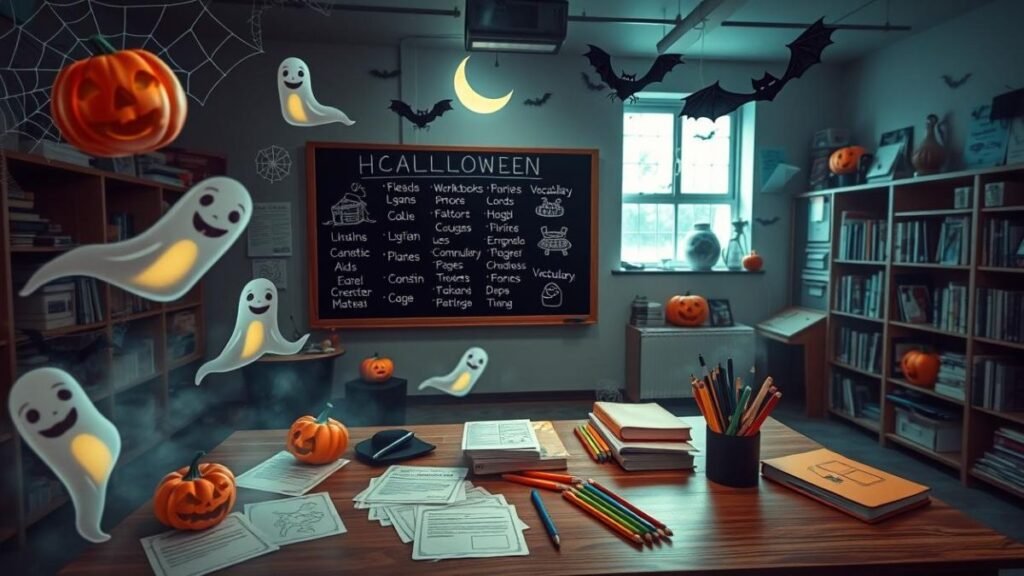
From pumpkin carving to costume design, these themed Halloween activities help learners grasp new words effortlessly. Movement-based games, like mummy wrap races, add energy to the classroom. Role-playing trick-or-treat scenarios prepares students for real conversations.
This method isn’t just about memorisation – it’s about creating memorable experiences. By weaving festive elements into lessons, students absorb vocabulary naturally. Ready to explore creative ways to boost their skills?
Key Takeaways
- Seasonal themes make vocabulary practice engaging for beginners.
- Hands-on tasks, like pumpkin carving, reinforce word retention.
- Movement games cater to kinetic learners’ preferences.
- Role-play builds confidence for real-life interactions.
- Festive lessons create a fun, immersive learning environment.
Introduction to Halloween-Themed English Learning
The spooky season brings a magical opportunity to blend language learning with festive fun. For beginners, the excitement around costumes and treats creates a natural enthusiasm for lessons. Teachers can harness this energy to make vocabulary stick – without relying on rote memorisation.
Why seasonal themes boost engagement
Learners absorb words faster when they’re tied to vivid experiences. Decorating the classroom with student-made bats or ghosts turns a lesson on body parts into an immersive game. Renaming groups as ‘tricksters’ or ‘witches’ adds playful competition.
Pro tip: Borrow the Spencer Clarke Group’s £1 charity dress-up day concept. It builds camaraderie while practising descriptive language (“I’m wearing a striped witch’s hat!”).
Creating a welcoming, inclusive space
Not all students celebrate Halloween, so rehearse classroom trick-or-treat scenarios to ease nerves. Compare traditions with Brazil’s Dia das Bruxas – this sparks conversations about cultural differences. Labelled decorations (like a paper bat with “wing” written on it) double as learning aids.
“Seasonal themes aren’t just about fun – they’re a bridge to real-world language use.”
For more ESL Halloween activities, explore structured games that weave grammar into the festivities. The key? Keep it light, interactive, and packed with real-life vocabulary.
Essential Halloween Activities – Vocabulary Building
Creative exercises with seasonal elements help students grasp new words effortlessly. Visual aids and interactive tasks turn lessons into lively experiences, reinforcing retention. For beginners, linking terms to tangible objects makes vocabulary stick.
Picture-Word Matching with Spooky Creatures
Use illustrated cards to pair terms like *arachnid* with spider web diagrams. Painted rock bats can teach adjective-noun combos (*hairy bat*, *tiny fangs*). This method builds technical vocabulary while keeping it playful.
Pro tip: Add Portuguese translations to flashcards for Brazilian learners. It bridges language gaps and celebrates cultural diversity.
Costume Description Flashcards
Introduce 20+ terms like *witch’s hat* or *zombie walk* through labelled images. Students describe outfits using texture words (*scratchy cape*, *glittery mask*). For kinesthetic learners, set up a *slimy potion* station to explore tactile terms.
“Multisensory learning taps into memory triggers – sight, touch, and sound make words unforgettable.”
Turn recyclables into a *haunted house* decor project. Label each part (*creaky door*, *crooked fence*) to reinforce spatial vocabulary. These activities blend creativity with language practice, perfect for A1–A2 levels.
Interactive Halloween Storytelling Sessions
Stories spark imagination while teaching language naturally. For beginners, simplified tales with visual aids make learning enjoyable. Seasonal themes add excitement, helping students remember new words.
Ghost stories made simple
Adapt classic tales like Whitby Abbey’s Dracula play for A2 readers. Short sentences and clear vocabulary keep it accessible. Add pictures to help visual learners follow along.
Compare British legends with Brazilian folklore. The Saci, a one-legged trickster, offers cultural connections. This builds vocabulary while exploring traditions.
Carving out language skills
Pumpkin carving instructions teach imperative verbs clearly. Students follow steps like:
| Step | Action | Vocabulary |
|---|---|---|
| 1 | Cut the top | lid, remove, scoop |
| 2 | Draw the face | triangle, circle, carve |
| 3 | Light inside | candle, glow, safe |
Historical figure designs add educational value. Students learn about famous personalities while practising craft terms.
“When learners create while listening, they remember 75% more vocabulary.”
Time markers like first, next, and finally help structure the activity. This builds sequencing skills alongside language development.
Classroom Decoration with Learning Purposes
Transform your classroom into a lively learning space with themed decorations. These aren’t just for show – they reinforce vocabulary while adding a festive touch. From labelled bats to glowing word displays, every element serves a dual purpose.
Labelled Bats for Anatomy Lessons
Paper bats with wing or ear labels turn biology into a hands-on game. Students assemble them while learning body parts. Add adjectives like pointy or fuzzy to expand descriptive language.
Spider Web Word Webs
Stretch cotton between chairs to create a giant web. Hang cards with synonyms (e.g., scary, frightening) for students to match. For maths integration, number the web’s strands like Spencer Clarke’s pumpkin bowl activity.
“Decorations become lessons when students interact with them – stickiness equals stickiness in memory.”
Pumpkin-shaped word walls build adjective chains (round, orange, glowing). Borrow Dover Castle’s illumination concept with battery tea lights under vocabulary cards. The glow draws attention to key terms like shadow or sparkle.
Trick-or-Treat Role Play for Speaking Practice
Role-playing turns language practice into an engaging adventure for young learners. Structured scenarios help them practise real-world interactions, from polite requests to expressing emotions. This method builds confidence while keeping lessons lighthearted and fun.
Mastering Polite Exchanges
Rehearse simple dialogues like “Trick or treat?” and “Thank you!” to reinforce manners. Use Spencer Clarke’s reverse role-play technique – students play the homeowner to practise responses. For anxious learners, pre-lesson rehearsals ease nerves.
Incorporate Brazilian phrases like Doces ou Travessuras to celebrate cultural diversity. Compare reactions to healthier treats (apples) versus chocolates – teach vocabulary for joy (“Yummy!”) or polite disappointment (“Maybe next time!”).
Emotions in Action
Role-play Kenilworth Castle’s historical figures receiving treats. Students mimic exaggerated facial expressions – wide smiles for sweets, puzzled looks for toothbrushes. This builds emotional vocabulary (surprised, delighted) naturally.
“Role-play isn’t just acting – it’s muscle memory for real conversations.”
End with a group reflection: “How did you feel?” This reinforces both language and self-awareness, making every exchange a learning moment.
Pumpkin-Based Language Activities
Autumn’s favourite fruit becomes a lively teaching tool in these engaging exercises. Whether carving or cooking, pumpkins help learners grasp verbs, measurements, and cultural terms effortlessly. The tactile nature of these tasks boosts retention far better than rote memorisation.
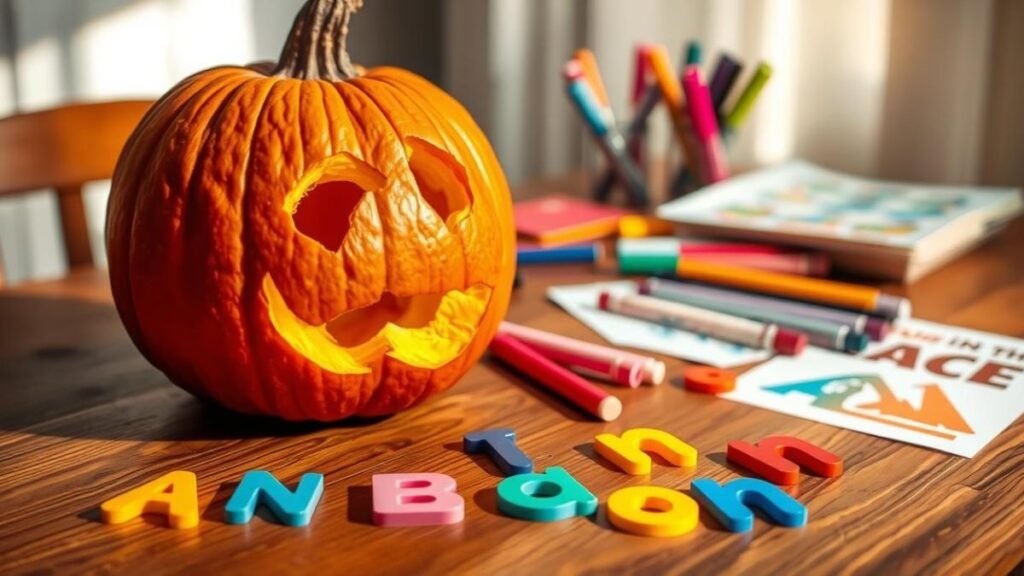
Carving Steps as Reading Practice
Turn pumpkin carving into a sequencing game. Jumble imperative sentences like *”Scoop the seeds”* or *”Draw triangle eyes”* for students to rearrange. Pendennis Castle’s historical pumpkin displays add descriptive writing prompts (*”Describe the knight’s carved frown”*).
Integrate maths by estimating seed counts. Label bowls with *”hundreds”* or *”dozens”* to practise quantifiers. This hands-on way blends STEM vocabulary with language learning seamlessly.
Recipe Verb Matching
Compare British pumpkin pie with Brazil’s doce de abóbora. Students match action verbs to recipe steps – *”chop”* for onions, *”simmer”* for spiced syrup. Highlight imperatives like *”Whisk for two minutes”* to reinforce grammar naturally.
“When learners touch, measure, and taste, vocabulary sticks like pumpkin seeds to a spoon.”
End with a taste test, describing textures (*”crusty vs. creamy”*). This multisensory approach ensures lessons are as memorable as they are delicious.
Movement-Based Halloween Games
Getting students moving while learning keeps lessons dynamic and memorable. Physical games with seasonal twists reinforce vocabulary through action, laughter, and teamwork. These activities are perfect for young learners who thrive on energy and interaction.
Mummy wrap race with adjective shouts
Turn teamwork into a vocabulary challenge with this lively game. Students wrap classmates in toilet paper while shouting descriptive words like “fuzzy” or “gloomy”. The fastest team wins, but only if they use correct adjectives.
For Brazilian classrooms, compare textures using Portuguese terms like “macio” (soft) versus “áspero” (rough). This builds bilingual connections while keeping the energy high.
Broomstick balance with vocabulary recall
Students balance beanbags on heads while navigating an obstacle course. Each checkpoint requires them to shout Halloween-related words – perfect for practising pronunciation under pressure.
Incorporate music from Carlisle Castle’s ghost tours for atmosphere. Pause tracks unexpectedly – students must freeze and recite vocabulary words. This twist on musical statues adds language practice to movement.
“When bodies move, brains engage – kinesthetic learning boosts retention by 40%.”
Adapt classic games with seasonal flair:
- Zombie freeze dance (action verbs)
- Eyeball relay races (colour vocabulary)
- Pumpkin patch balance beam (counting practice)
These activities work well for mixed-level classes. Beginners focus on single words, while advanced learners form full sentences. The key is keeping it joyful – when students enjoy the game, they hardly notice they’re learning.
For more active ideas, explore these creative movement games that blend physical education with language development.
Halloween-Themed Writing Challenges
Creative writing takes a thrilling turn with seasonal prompts that spark imagination. These exercises help learners structure sentences while exploring eerie vocabulary. From haunted mansions to mystical potions, every task builds language skills in a playful way.

Crafting spooky sentences
Word bank cauldrons make sentence-building magical. Students draw cards with themed terms like “flickering candle” or “creaking door” to construct phrases. English Heritage’s prompts add historical flair – describe Scarborough Castle’s ghostly legends using five sensory words.
Compare settings like Whitby Abbey with Brazil’s Casa da Colina. This builds cultural awareness while practising descriptive language. For beginners, provide sentence starters:
- “The shadowy figure was…”
- “Suddenly, the home began to…”
- “Under the full moon, I heard…”
Describing eerie spaces
Shoebox haunted houses become 3D writing prompts. Students label rooms with sticky notes – “dusty attic” or “web-covered cellar”. Spencer Clarke’s safety rules for potion-making teach imperative verbs clearly:
“Never mix liquids without gloves. Always stir clockwise. Label every bottle clearly.”
Extend the activity with spooky story dice. Roll for random elements – a location (abandoned home), character (laughing ghost), and problem (missing key). This structured creativity keeps A1–A2 learners engaged without overwhelm.
Cultural Exploration of Halloween Traditions
Exploring different customs makes language learning richer and more meaningful. Seasonal celebrations offer a window into cultural values, traditions, and shared histories. For students, comparing global festivities builds vocabulary while fostering curiosity about the world.
British Apples Meet Brazilian Bread
In the UK, apple bobbing is a playful tradition dating back to Roman harvest festivals. Brazil’s Pão-por-Deus (Bread for God) involves children exchanging blessings for treats. Both customs celebrate generosity but with distinct flavours – one watery, the other doughy.
Key differences emerge in the language used:
| Tradition | Key Phrases | Cultural Meaning |
|---|---|---|
| Apple Bobbing | “Nose dries!” (cheat warning) | Harvest prosperity |
| Pão-por-Deus | “Bolinho ou dinheiro?” (Cake or money?) | Christian charity |
Timelines That Tell Tales
Celtic Samhain festivals inspired modern celebrations. Brazil’s Dia do Saci (Saci Day) on 31st October honours folklore instead. Students can map these timelines to see how history shaped traditions.
Notable connections include:
- Salem witch trials (1692) influencing spooky imagery
- Portuguese “bolo das almas” (soul cakes) translations
- Eltham Palace’s witch trial exhibits
“When learners see traditions as living history, vocabulary becomes a bridge between cultures.”
Bilingual charts help visualise these links. Students might compare “trick-or-treat” with gostosuras ou travessuras, noting how languages adapt shared concepts.
Multisensory Halloween Learning Stations
Engaging multiple senses helps learners retain new words more effectively. Hands-on stations with tactile and auditory elements turn vocabulary practice into an immersive experience. These setups work brilliantly for young students who learn best through interaction.
Exploring texture words with slimy experiments
Set up a “mad scientist” station with bowls of safe mixtures. Students match gloopy textures like cornflour slime to adjective cards (sticky, slippery). Spencer Clarke’s glow stick hunts add prepositions practice – hide sticks under tables or behind books.
For Brazilian classrooms, compare textures using local materials. Coconut husks (rough) and tapioca paste (stretchy) make great comparisons. This builds descriptive language while celebrating cultural diversity.
Sound bingo for auditory learners
Create bingo cards with spooky noises like creaking doors or owl hoots. Play audio clips – students mark matches while practising listening skills. Wrest Park’s outdoor recordings add nature sounds for advanced rounds.
Turn it into a family game night suggestion. Parents can use household items to recreate sounds. A cracking walnut becomes “bones breaking” – perfect for imaginative play.
| Station | Materials | Language Focus |
|---|---|---|
| Tactile wall | Cotton webs, foil bats | Texture adjectives |
| Sound hunt | Recordings, headphones | Action verbs |
| Glow word jars | LED lights, labelled jars | Prepositions |
“When students touch, hear, and see words simultaneously, retention rates triple compared to textbook learning.”
Rotate stations every 15 minutes to maintain energy. Include calming things like scented playdough for overstimulated learners. This approach ensures every child thrives, regardless of learning style.
If you’re looking for more creative ways to practice English while having fun, don’t miss our article on Math Exercises in English (A1–B1): Symbols, Shapes, and Problem Solving. It’s a great resource for combining language learning with logic and visual skills — perfect for learners who enjoy themed activities like Halloween.
Conclusion: Continuing the Language Magic Beyond Halloween
Keep the excitement alive all year by adapting these creative language exercises. Swap pumpkin fractions for Christmas pudding measurements, or turn ghost stories into Easter treasure hunts. Spencer Clarke’s seasonal teamwork ideas show how small tweaks keep lessons fresh.
Update vocabulary webs monthly – spring blossoms can teach colour terms, while summer festivals reinforce action verbs. For Brazilian classrooms, Carnival costume projects offer a vibrant way to practise descriptive phrases.
The key? Treat every celebration as a chance to learn. When lessons tie into real-life fun, students absorb language like sponges – no matter the season.
FAQ
How can Halloween-themed activities help with learning English?
Seasonal themes like pumpkins, costumes, and haunted houses make vocabulary memorable. Interactive games and storytelling boost engagement while practising new words.
What are some simple ways to teach Halloween vocabulary?
Use picture-word matching with ghosts or spiders, or describe costumes with flashcards. Labelled decorations like paper bats reinforce body parts and adjectives.
Can beginners join Halloween storytelling sessions?
Absolutely! Simplified ghost stories with repetitive phrases work well for A1 learners. Sequencing pumpkin carving steps also builds reading skills.
How do role-playing games improve language skills?
Trick-or-treat dialogues teach polite requests (“May I have…?”). Reacting to treats with emotion words (“scared”, “excited”) builds expressive vocabulary.
Are there active games for learning Halloween words?
Try a mummy wrap race where students shout adjectives (“creepy!”) while wrapping teammates. Broomstick balancing adds movement to vocabulary recall.
What writing activities fit a spooky theme?
Build sentences using word banks with terms like “witch” or “haunted house”. Descriptive worksheets about eerie settings encourage creative writing.
How can I teach cultural aspects of Halloween?
Compare traditions like British trick-or-treating with Brazil’s “Dia das Bruxas”. A timeline activity explores the holiday’s history in English-speaking countries.
Do sensory activities help with language learning?
Yes! “Slimy potion” stations teach texture words (“sticky”, “gooey”). Sound bingo with howls or creaking doors sharpens listening skills.