
Introduction
Ever wondered how combining numbers and language could make learning more exciting for young minds? For pupils from Kindergarten to Year 6, mastering foundational skills doesn’t have to feel like a chore. With fresh weekly updated math worksheets, pupils can explore shapes, symbols, and word-based challenges while improving their English proficiency through engaging Math Exercises.ze4 r
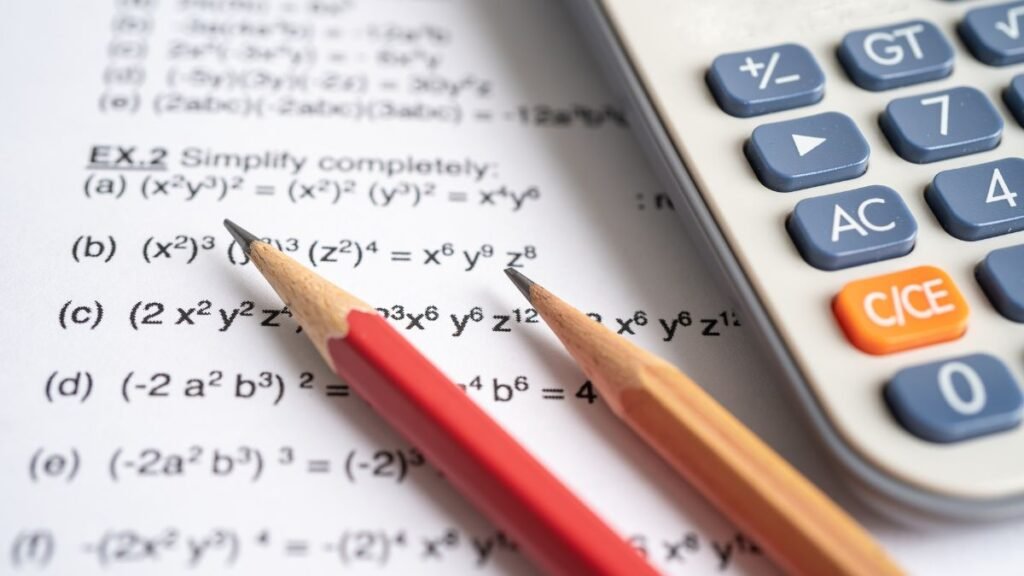
These resources aren’t just about solving problems—they’re designed to spark curiosity. Each sheet blends critical thinking with language development, making them ideal for A1–B1 learners. Teachers and parents save hours every week, thanks to ready-to-use materials aligned with the curriculum.
For five years, these engaging exercises have helped pupils build confidence. Whether it’s practising functions or tackling real-world scenarios, the approach keeps learning dynamic. Ready to see how these tools can transform your child’s or student’s progress?
Key Takeaways
- Weekly updated math worksheets keep learning fresh and engaging.
- Supports English language development for A1–B1 learners.
- Includes word problems to enhance critical thinking.
- Saves time for teachers and parents with ready-to-use materials.
- Curriculum-aligned for pupils from Kindergarten to Year 6.
Foundational Math Exercises for A1-B1 Learners
Building a strong foundation in numeracy and language skills can be both fun and rewarding for young learners. Our carefully designed resources, including engaging math worksheets, help pupils grasp essential concepts while improving their English proficiency. Whether it’s recognising symbols or solving real-world problems, these activities make learning engaging.
Understanding Basic Symbols and Terms
Mastering mathematical language is crucial for A1-B1 learners. Bilingual explanations help pupils connect symbols like + (plus) and − (minus) with their meanings. Step-by-step walk-throughs simplify complex topics, ensuring clarity.
“When pupils understand the language of numbers, they gain confidence in solving problems.”
Here’s a quick reference table for common symbols:
| Symbol | Term | Example |
|---|---|---|
| + | plus | 3 + 2 = 5 |
| − | minus | 7 − 4 = 3 |
| × | times | 5 × 2 = 10 |
| ÷ | divided | 10 ÷ 2 = 5 |
Exploring Shapes and Their Properties
Geometry comes alive with shape identification tasks. Pupils learn terms like rhombus and parallelogram while exploring their properties. Visual aids make abstract concepts tangible, reinforcing vocabulary naturally.
- Match shapes to their names
- Count sides and angles
- Identify symmetrical patterns
Simple Arithmetic Operations Practice
From addition to multiplication, structured drills build fluency. Real-life scenarios, like calculating change, help pupils see the value in what they’re learning. These exercises align with Year 1–6 curriculum standards for targeted skill-building.
Key benefits include:
- Improved problem-solving speed
- Stronger mental calculation skills
- Better understanding of number relationships
Problem-Solving Strategies with Math Exercises
Tackling word problems doesn’t have to feel overwhelming – with the right strategies, pupils can break them down with ease. By combining language skills with logical reasoning, learners build confidence in solving real-world challenges. These methods are tailored for A1–B1 levels, ensuring accessibility while fostering growth.

Breaking Down Word Problems Step-by-Step
Start by identifying key information. For example, a problem about budgeting pocket money might ask, *”If Lily saves £2 each week, how much will she have after 5 weeks?”* Pupils learn to:
- Circle important numbers (e.g., £2, 5 weeks).
- Underline the question (total savings).
- Eliminate unnecessary details.
“Students who plan their approach succeed at higher rates than those who don’t.” —
Maneuvering the Middle
Tools like the K.N.O.W.S. strategy (Know, Need, Organise, Work, Solution) further scaffold this process.
Using Visual Aids for Better Comprehension
Diagrams simplify complex ideas. A pie chart can clarify percentages, while a bar graph compares quantities. For instance:
- Draw a timeline to solve time-based problems.
- Use counters or blocks to model equations.
- Colour-code steps in multi-part functions.
These techniques align with visual learning preferences, making abstract concepts tangible.
Practising with Real-Life Scenarios
Context matters. A task like planning a trip reinforces time calculations: *”If the train leaves at 14:30 and takes 2 hours, when will you arrive?”* Advanced learners might explore introductory matrices through spreadsheet activities, such as organising data for a school event.
Weekly challenges—like calculating ingredient ratios for a recipe—keep skills sharp and relevant.
Practical Math Worksheets and Resources
Structured resources make mastering numerical concepts simpler for pupils at every level. From foundational skills to advanced topics, our math worksheets and materials are designed to save time while boosting confidence. Teachers and parents gain access to ready-made tools that align with curricular goals.
Grade-Specific Math Worksheets for Targeted Learning
Differentiated maths worksheets cater to Years 1–6, ensuring each pupil works at the right level. For example:
- Year 1–2: Focus on number bonds and simple shapes.
- Year 3–4: Introduce fractions and basic equations.
- Year 5–6: Tackle polynomials and introductory matrices.
“Members report saving 12 hours weekly on lesson planning with these curated sheets.”
Weekly Maths Challenges to Build Skills
Fresh tasks every week keep learners motivated. Progress tracking lets pupils see their growth, whether they’re solving word problems or graphing functions. Popular themes include:
- Budgeting scenarios (e.g., calculating savings over 8 weeks).
- Geometry puzzles with real-world applications.
- Timed drills to improve mental arithmetic speed.
Interactive Tools for Engaging Practice
Digital resources like equation solvers and geometry apps make abstract ideas tangible. A-level students benefit from complex number exercises, while younger learners explore via drag-and-drop shape activities. Key features:
- Instant feedback on algebra problems.
- Printable answer keys for self-assessment.
- School-leaving exam practice integrated seamlessly.
Math Exercises in English A1–B1: Symbols, Shapes, and Problem Solving – With Activities
Understanding Basic Symbols and Terms
Mastering mathematical language is crucial for A1–B1 learners. Bilingual explanations help pupils connect symbols like + (plus) and − (minus) with their meanings.
Exercise A – Write the solution. Follow the example.
Example: ? plus five equals 10 → (five plus five equals ten)
- ? plus three equals 7
- ? minus two equals 4
- ? times two equals 8
- ? divided by two equals 6
- ? plus six equals 9
- ? minus four equals 5
- ? times three equals 12
- ? divided by five equals 2
- ? plus eight equals 15
- ? minus seven equals 1
Exploring Shapes and Their Properties
Geometry comes alive with shape identification tasks. Pupils learn terms like rhombus and parallelogram while exploring their properties.
Exercise B – Match the shapes to their names.
Shapes: square – triangle – rectangle – circle – rhombus – parallelogram
Figures:
- ⬛
- 🔺
- ▭
- ⭕
- ◇
- ⬒
Write the correct name next to each figure.
Simple Arithmetic Operations Practice
Structured drills build fluency. Real-life scenarios, like calculating change, help pupils see the value in what they’re learning.
Exercise C – Solve these problems.
- Maria has 10 apples. She eats 3. How many apples are left?
- John buys 2 pencils for £2 each. How much does he spend?
- A book costs £12. You give the cashier £20. How much change do you get?
- Tom walks 2 km every day. How many km does he walk in 1 week?
- A pizza has 8 slices. If 5 are eaten, how many remain?
Problem-Solving Strategies with Math Exercises
By combining language skills with logical reasoning, learners build confidence in solving real-world challenges.
Exercise D – Word problems. Break them into steps.
- If Lily saves £2 each week, how much will she have after 5 weeks?
- The train leaves at 14:30 and takes 2 hours. What time will it arrive?
- A bag has 20 sweets. Anna gives 7 to her friend. How many sweets remain?
- A T-shirt costs £15. If you buy 3 T-shirts, how much do you spend?
- There are 12 chairs in the room. Each table needs 4 chairs. How many tables can you make?
Using Visual Aids for Better Comprehension
Visuals like pie charts and bar graphs simplify ideas.
Exercise E – Read the chart and answer.
(A small bar chart with 4 bars: Apples = 10, Bananas = 6, Oranges = 8, Grapes = 4)
Questions:
- Which fruit is the most popular?
- Which fruit is the least popular?
- How many fruits in total?
- How many more apples than bananas?
- Apples + grapes = ?
Practising with Real-Life Scenarios
Exercise F – Everyday maths.
- A bus leaves at 09:15. The trip takes 45 minutes. What time does it arrive?
- You buy 3 sandwiches at £4 each. How much do you spend?
- A recipe needs 200g of sugar. How much sugar is needed for 3 recipes?
- A family trip costs £250. If 5 people share equally, how much does each person pay?
- A bottle has 2L of water. How many 250ml glasses can you fill?
✅ Answer Key
Exercise A
- four plus three equals seven
- six minus two equals four
- four times two equals eight
- twelve divided by two equals six
- three plus six equals nine
- nine minus four equals five
- four times three equals twelve
- ten divided by five equals two
- seven plus eight equals fifteen
- eight minus seven equals one
Exercise B
- square
- triangle
- rectangle
- circle
- rhombus
- parallelogram
Exercise C
- 7 apples
- £4
- £8 change
- 14 km
- 3 slices
Exercise D
- £10
- 16:30
- 13 sweets
- £45
- 3 tables
Exercise E
- Apples
- Grapes
- 28
- 4 more
- 14
Exercise F
- 10:00
- £12
- 600g
- £50
- 8 glasses
To make math even more meaningful, it’s a great idea to practise with real-life contexts, like planning a trip or calculating travel times. If you want to explore this topic further, check out our guide on transportation in England with 7 essential tips — perfect for creating authentic word problems while learning English.
Conclusion
Blending numerical skills with English learning creates a powerful tool for bilingual pupils. Our resources simplify complex topics, making them accessible for every grade level. With over 20,000 math worksheets, learners build confidence while educators save time.
The 40-week programme offers structured practice, from basic arithmetic to advanced functions. Teachers gain ready-made materials, cutting planning time significantly. Whether reinforcing shapes or introducing matrices, these exercises adapt to diverse needs.
Explore our free repository or request custom plans tailored to your classroom. Share feedback to help expand our content—your input shapes future resources. Visit math-exercises.com today and unlock seamless learning!
FAQ
What are the best resources for practising basic arithmetic?
Grade-specific math worksheets and interactive tools offer structured practice for learners. Weekly challenges also help reinforce skills in a fun way.
How can visual aids improve problem-solving in maths?
Diagrams and charts simplify complex ideas, making it easier to understand relationships between numbers and shapes.
Are real-life scenarios useful for learning maths?
Absolutely! Applying concepts to everyday situations, like budgeting or measuring, helps solidify understanding and boosts confidence.
Where can I find math worksheets tailored to different skill levels?
Many educational websites provide free, downloadable math materials sorted by difficulty, from beginner to intermediate levels.
What’s the best way to tackle word problems?
Break them into smaller steps – identify key terms, translate them into equations, and solve systematically.
2 thoughts on “Math Exercises in English A1–B1: Symbols, Shapes, and Problem Solving”