Introduction
Reflexive pronouns might seem easy, but they often lead to mistakes in writing. This guide will help you understand reflexive pronouns clearly. It’s perfect for ESL learners and teachers looking for quick, easy-to-understand lessons.
Learn how to use yourself correctly and when to skip it. You’ll also see the difference between myself and me in emails and daily talk. The main rule is simple: use the reflexive form when the subject and object are the same person.
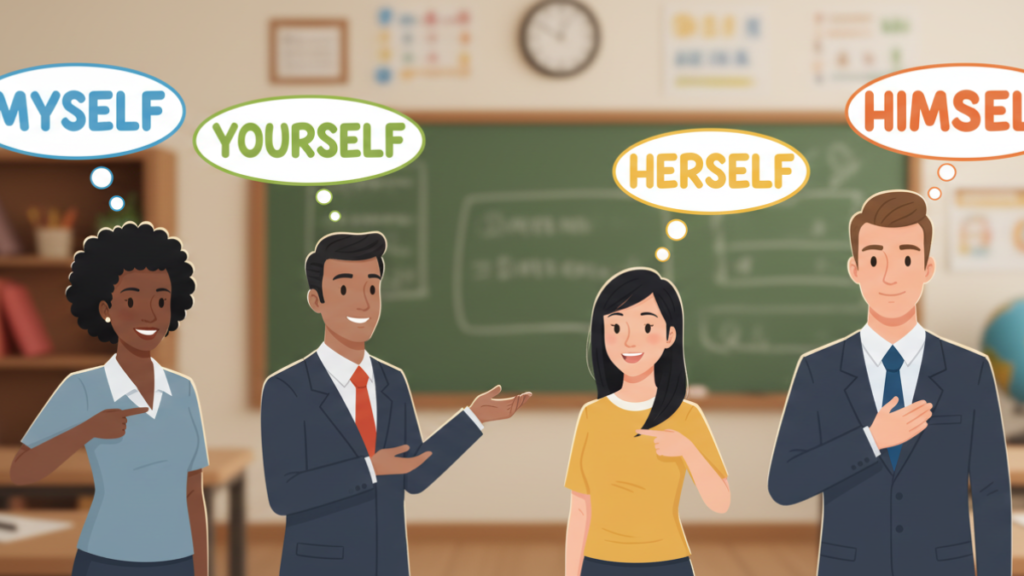
This guide is like a workbook. It starts with definitions, then moves to forms and key rules. It also covers common mistakes and how to use intensive pronouns correctly. The rules work the same in American and British English, but we follow British English spelling here.
Key takeaways
- Recognise reflexive pronouns in common contexts and sentence patterns.
- Understand reflexive pronoun meaning by linking the pronoun back to the subject.
- Choose the right form by person and number, and use it where the subject and object same person.
- Apply the main rule for how to use yourself correctly without overusing reflexive forms.
- Avoid frequent errors such as myself vs me in routine messages and formal writing.
- Distinguish intensive pronouns vs reflexive use to add emphasis only when it helps clarity.
What reflexive pronouns are and why they matter in English grammar
Reflexive forms are small but pack a big punch in meaning. They help make English sentences clear. This is because they show who did what and to whom, without any confusion.
Definition of reflexive pronouns
Reflexive pronouns end in -self or -selves. They point back to the person or thing doing the action. Examples include myself, yourself, and themselves.
Good examples of reflexive pronouns are short and clear. For instance, “She hurt herself” and “They prepared themselves.” They show the action goes back to the same person or group.
How reflexive pronouns relate to the subject and object
In English grammar, the subject does the action and the object gets it. Reflexive pronouns are used when both are the same. This keeps the sentence precise.
For example, “The manager blamed himself, not the team” is clear. But “The manager blamed the team” changes the meaning. It shifts the blame to others.
| Pattern | Meaning | Reflexive pronouns examples |
|---|---|---|
| Subject acts on the same person | The doer and receiver are identical, so a self pronoun is needed. | I taught myself to type faster. |
| Subject acts on another person | The receiver is different, so an object pronoun or noun is required. | I taught her to type faster. |
| Multiple people mentioned | A reflexive form removes doubt about who is affected. | The coach criticised herself, not the players. |
Understanding reflexive pronouns becomes easier when you already know how subject and object pronouns work in English sentences. These forms often appear together in everyday communication, especially when the subject and the object refer to the same person. If you would like to review the difference between forms like I and me or she and her, the article Subject and Object Pronouns: I or Me? Common Mistakes Explained provides clear explanations and practical examples.
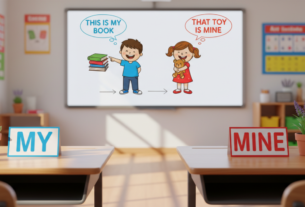
Another important connection is between reflexive pronouns and possessive forms. While reflexive pronouns refer back to the subject of the sentence, possessive adjectives and pronouns are used to show ownership or relationships between people and things. To better understand the difference between forms like my and mine, you can explore the article Possessive Pronouns and Adjectives: My or Mine Explained Clearly, which explains these structures with simple rules and useful examples.
Common situations where reflexive pronouns improve clarity
Reflexive pronouns often appear in learning, accidents, and daily routines. They reduce repetition and enhance sentence clarity. This is especially true when the same noun appears twice.
- Actions done to the same person: “I taught myself.”
- Accidents and harm: “He cut himself while cooking.”
- Self-care routines: “She dressed herself before the meeting.”
- Busy sentences with more than one person: “The manager blamed himself during the review.”
Choosing reflexive pronouns correctly is important. They are not just a polite alternative to object pronouns. If the subject and object are different, using a reflexive pronoun can make the sentence sound wrong and confuse the grammar.
Reflexive Pronouns: the full list of forms and how to choose the right one
A reflexive pronoun points back to the subject. To get correct pronoun choice, learners match the form to the person (who), number (one or more), and, when needed, gender (he or she).
The reflexive pronouns list below works as a quick check while drafting, editing, or teaching. It also helps avoid non-standard forms such as theirselves, which should be themselves.
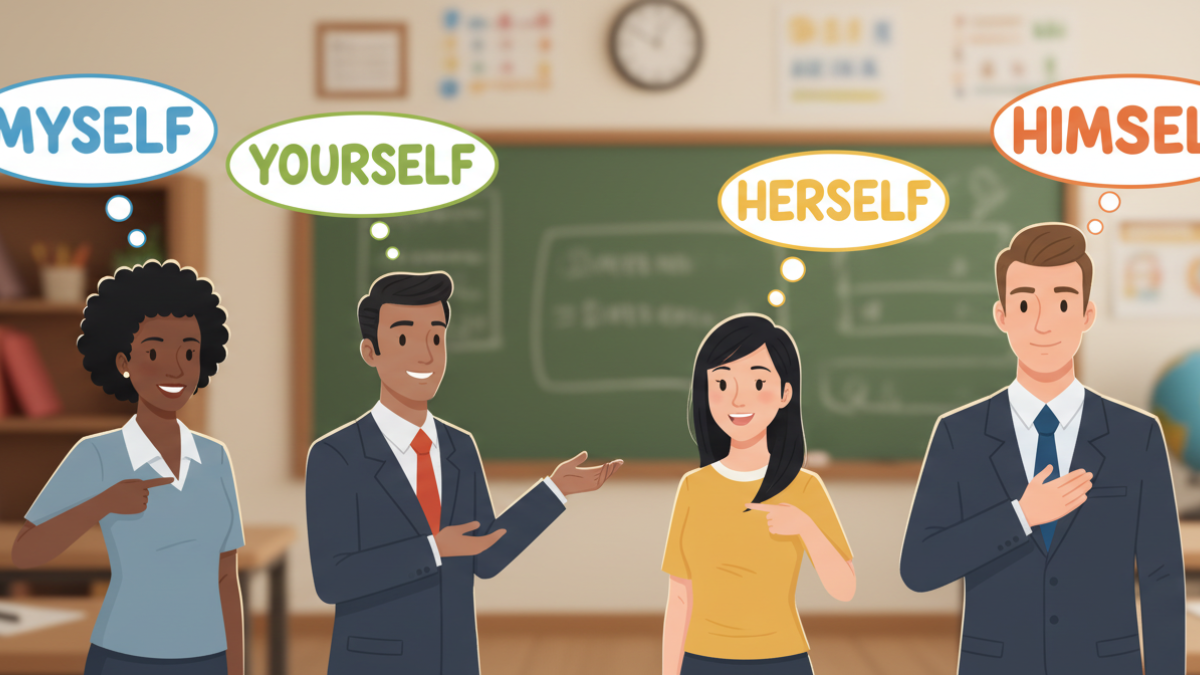
Singular forms: myself, yourself, himself, herself, itself
Singular forms are used when the subject is one person or one thing. The set myself yourself himself herself itself often appears with everyday verbs like hurt, cut, introduce, and prepare.
In American English, you can mean one person or many. That is why yourself depends on meaning, not spelling. If one person is addressed, use yourself.
| Base pronoun | Reflexive form | Quick recognition tip | Example for correct pronoun choice |
|---|---|---|---|
| I | myself | First person singular | I reminded myself to check the time. |
| you (singular) | yourself | One listener or reader | Please help yourself to a seat. |
| he | himself | Male reference is clear | He taught himself the routine. |
| she | herself | Female reference is clear | She described herself in one sentence. |
| it | itself | Thing, animal, or system | The device shut itself down. |
| we | ourselves | First person plural | We prepared ourselves for the test. |
| you (plural) | yourselves | More than one person addressed | You should pace yourselves during revision. |
| they | themselves | Third person plural | They organised themselves before the meeting. |
Plural forms: ourselves, yourselves, themselves
Plural forms refer to a group. The set ourselves yourselves themselves is chosen by meaning: who is included, and how many people are doing the action.
Themselves is the standard choice with plural they. In formal US writing and tests, replacing theirselves with themselves avoids an easy error.
Matching person, number, and gender correctly
Use a simple matching rule for correct pronoun choice: first person (I/we) takes myself or ourselves; second person (you) takes yourself or yourselves; third person takes himself, herself, itself, or themselves.
Gender accuracy matters when the sentence clearly identifies a man or a woman. If the person is not identified, writers often recast the sentence to keep reference clear, rather than guessing between himself and herself.
When checking a paragraph, a reflexive pronouns chart is useful: confirm the subject and the reflexive form match. That single step reduces mix-ups and keeps the reflexive pronouns list easy to apply in real sentences.
Core rules for using yourself, myself, and other reflexive forms correctly
Learning reflexive pronouns is simpler than it seems. Focus on the meaning, not just the form. If a sentence is unclear, check who is doing the action and who is receiving it.
Do a quick check: Is the action done to the same person or thing? If yes, a reflexive form is often the best choice. This is the core of subject equals object.
When the subject and object are the same
Use a reflexive pronoun when subject equals object. It shows the action returns to the doer, so the reader does not guess.
| Meaning | Not reflexive | Reflexive |
|---|---|---|
| Blame is aimed at another person | She blamed her. | She blamed herself. |
| Introduction is for someone else | They introduced him. | They introduced themselves. |
In both pairs, the reflexive form signals one clear idea: the doer and receiver match. This is the practical test behind most reflexive pronouns rules.
Using reflexives after prepositions: when it works and when it does not
Reflexive after prepositions can be correct, but only when it adds real meaning. The classic case is the by myself meaning: alone, or without help.
- She travelled by myself is wrong; it must match the subject: She travelled by herself.
- I fixed it by myself. (alone / without help)
- He kept the criticism to himself. (private, not shared)
- Save a copy for yourself. (for your own benefit)
Avoid reflexives that are used only to sound official. In business English, Please contact me is cleaner than Please contact myself.
Common verb patterns that frequently take reflexives
Many verbs with reflexive pronouns describe self-directed actions. Some are optional in modern English, but the reflexive can still be used for clarity.
- Daily actions: wash (yourself), dress (yourself), shave (yourself) (often shortened: He shaved.)
- Learning and behaviour: teach yourself, help yourself, enjoy yourself, pride yourself on
- Mental and emotional control: prepare yourself, convince yourself, control yourself
When choosing between an object pronoun and a reflexive, return to the same test: does subject equals object? If it does, reflexive after prepositions and other patterns usually sound natural and precise.
Reflexive pronouns vs object pronouns: avoiding common mistakes
Many English learners mix up reflexive forms with standard objects. The trick is to pick the right pronoun based on the sentence’s job, not just to sound polite. This helps avoid reflexive pronoun mistakes.
For a quick refresher, check out this guide on reflexive pronouns.
Choosing between “me” and “myself” in everyday sentences
When deciding between myself and me, think about who is doing the action. Use me when someone else is doing it: She emailed me. Use myself when it’s the same person: I emailed myself the file.
In business or classroom settings, remember: if you mean “to me”, write it that way. Say Please send it to me, not to myself. This follows object pronoun rules and keeps your message clear.
Why “between you and I” is wrong, and what to use instead
After a preposition like between, you need an object form. That’s why between you and me is correct, even if it sounds informal.
Try this quick test: remove the other person. Between me works, but between I doesn’t. This trick helps avoid a common mistake in the US.
Typical learner errors and how to fix them quickly
Many learners use reflexives too much to sound formal. Remember, the key is to understand who is doing the action and who is receiving it. Then, choose the correct form.
| Common wording | Better wording | Quick reason |
|---|---|---|
| My friend and myself went to the meeting. | My friend and I went to the meeting. | Compound subject needs a subject pronoun. |
| The teacher explained the task to myself. | The teacher explained the task to me. | After to, use an object pronoun. |
| They looked at theirselves in the mirror. | They looked at themselves in the mirror. | Correct plural reflexive form is themselves. |
| He enjoyed hisself at the concert. | He enjoyed himself at the concert. | Correct spelling and standard reflexive form. |
- To fix errors fast, identify the verb, then ask: “Who is doing it?” and “Who gets it?”
- If a preposition comes first (to, for, between, with), re-check object pronoun rules.
- When in doubt, remove extra words to test sound: “to me”, “between you and me”.
- Teach patterns, not prestige: formal tone comes from clarity, not from overusing reflexives.
Emphatic (intensive) pronouns: using reflexive forms for emphasis
English has forms that do two jobs. They can be reflexive pronouns or intensive pronouns. When used as emphatic pronouns, they add stress to a message, not complete the verb’s meaning.
Testing the difference between reflexive and intensive is easy. A true reflexive shows the subject does something to themselves. An intensive for emphasis still works without the pronoun, but loses some force.
| Use | Example | What it signals |
|---|---|---|
| Reflexive (object role) | She hurt herself. | The action returns to the subject; the verb needs that object. |
| Intensive after the subject | I myself disagree. | The speaker highlights personal stance, not a different object. |
| Intensive at the end | I fixed it myself. | Focus on who did the work; it echoes “I did it myself”. |
| Intensive with contrast | She herself signed the form. | It was not a colleague or assistant; the signer matters. |
Placement of intensive pronouns is flexible but follows patterns. They often sit after the subject or at the end of a clause. This choice affects the rhythm, making the end position sound like a strong final note.
- After the subject: “We ourselves checked the figures.”
- At the end: “We checked the figures ourselves.”
Intensive pronouns can sound dramatic, defensive, or even irritated in formal writing. In workplace English, one emphasis is usually enough. This is especially true in emails, where tone can be easily misread.
Edit quickly with one question: if removing myself or yourself keeps the core meaning, it’s an intensive pronoun. If removing it breaks the sentence or changes the action, it’s a reflexive pronoun, not just for emphasis.
Reflexive pronouns in real writing: emails, essays, and workplace English
Reflexive forms can make writing clear and polite, but only when they match the meaning. In day-to-day messages, many learners use them to sound formal. Yet, the result can feel odd. This part focuses on reflexive pronouns in emails and longer academic work, with a practical lens on workplace English grammar.

Professional tone: when reflexives sound natural
Reflexives work well when the subject and object are the same person. They also fit set phrases that are common in professional communication.
- Please introduce yourself at the start of the call.
- If you have questions, help yourself to the resources provided.
- Before you submit, ask yourself whether the point is clear.
In messages, writers sometimes add myself to sound careful, but the meaning changes or becomes unclear. A line like “I’ve copied myself for records” often reads better as “I’ve copied myself into the thread for tracking” or simply “I’ve copied myself on the email”, depending on the office style. This is a common spot for editing reflexive pronouns.
Overuse to avoid in formal writing
In essays and reports, reflexives should not replace normal pronouns. This matters in formal writing myself, where tone should stay direct and precise.
- Please contact myself → Please contact me
- Myself will review it → I will review it
- Please speak to yourself (only correct if the person must speak to the same person)
These errors often come from aiming for authority, but they weaken clarity. Strong workplace English grammar usually prefers the simplest correct form.
Quick edit checklist for accuracy and flow
Use this short scan before sending a message or submitting an essay. It supports consistent editing reflexive pronouns without slowing the writing process.
- Is the subject doing something to the same person or thing? If not, use an object pronoun.
- Is the word only adding emphasis? If yes, remove it and re-read the sentence.
- After a preposition, is the meaning truly reflexive (for one’s own benefit, alone, privately)?
- Check agreement: yourself / yourselves; themselves (not theirselves).
- Read aloud once. Does it sound natural for professional communication?
| Context | Less clear or over-formal | Cleaner option | Why it works |
|---|---|---|---|
| Meeting set-up | Please introduce yourselves and tell us your role. | Please introduce yourselves at the start and share your role. | Keeps the reflexive natural and trims extra wording. |
| Email follow-up | Please contact myself with any questions. | Please contact me with any questions. | Object pronoun is correct; reflexive is not needed. |
| Responsibility statement | Myself will review the draft today. | I will review the draft today. | Subject pronoun fits standard workplace English grammar. |
| Copying on threads | I’ve copied myself for records. | I’ve copied myself into the thread for tracking. | Makes the action and purpose explicit in reflexive pronouns in emails. |
Tricky cases and exceptions: where reflexive pronouns are not used
Many learners find it tricky to use reflexive pronouns correctly in everyday English. Often, the reflexive meaning is clear, making the extra word seem unnecessary. For instance, saying He shaved or She dressed quickly is common. Here, using a reflexive is optional.
One important rule is that reflexive pronouns can’t replace subject pronouns. Saying Myself went to the shop is wrong. The right way is I went to the shop. This rule is crucial in emails and meeting notes, where mistakes can spread quickly.
Another common mistake is using myself after and. This is to avoid choosing between me and I. However, it’s incorrect. Instead, write: My manager and I will attend. This is a common mistake in business English.
Check if the sentence talks about the same person doing and receiving the action. If not, a reflexive is likely wrong. For example, She looked at him is correct because the object is different. This trick helps learners avoid mistakes with reflexive pronouns.
Some verbs can confuse learners because they naturally point back to the subject. Remember, reflexives are not used with feel in standard English. Say I feel tired, not I feel myself tired. Using a reflexive here sounds unnatural.
Learning fixed phrases as complete units is helpful. The difference between by myself and alone is a good example. Both mean “without other people”, but by myself is more personal. On the other hand, enjoy yourself is expected and idiomatic, even though reflexives are optional in many cases.
| Pattern | Correct example | Why it works |
|---|---|---|
| Subject must be a subject pronoun | I sent the invoice yesterday. | A reflexive cannot act as the subject in standard English. |
| After “and” in a compound subject | My manager and I will attend. | Reflexives do not fix me/I choice; use normal grammar. |
| Object is a different person | She looked at him. | Reflexives are for the same person twice, not a new object. |
| Everyday actions where reflexive is understood | He shaved before work. | Modern style prefers the shorter form; reflexive optional is common. |
| Verb pattern reminder: not used with feel | I feel nervous about the interview. | Feel does not normally take a reflexive object in this meaning. |
| Fixed expression | I travelled by myself for a week. | This set phrase is standard; by myself vs alone is a meaning choice. |
Practice section: examples and mini-exercises to build confidence
Practice Section: This short set of exercises is great for checking your reflexive pronouns fast. Start with the easier ones and then move to the harder ones. Compare your answers with the guidance provided. It’s like an ESL grammar worksheet: quick, clear, and easy to mark.
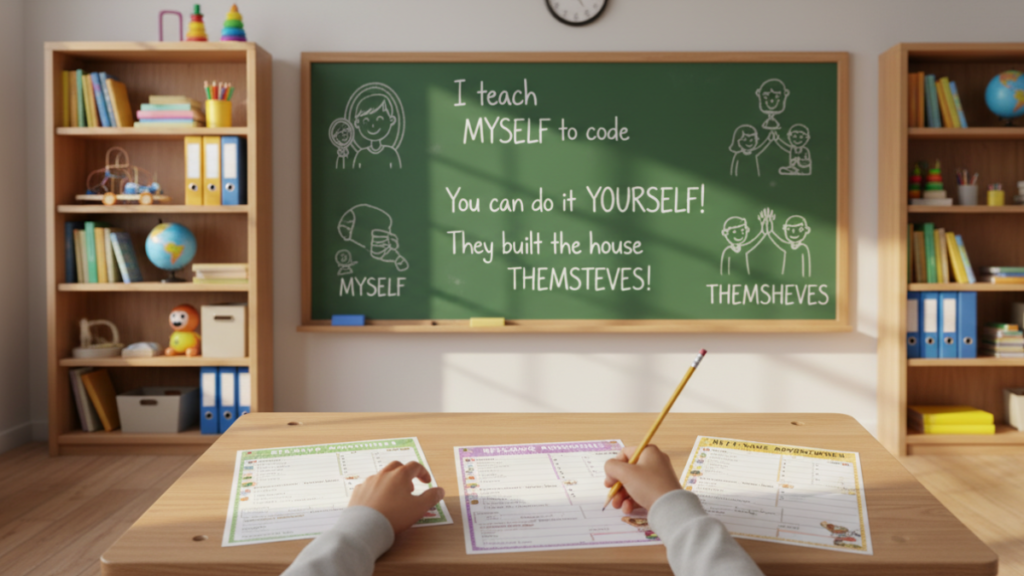
Before you start: A reflexive pronoun is used when the subject and object are the same. It’s also used for emphasis, but it must sound natural.
Fill-in-the-blank sentences with answer key guidance
Exercise 1 (A1–A2): Choose the correct reflexive pronoun.
- I taught ____ to use the new calendar app.
- Please help ____ to some water.
- The cat cleaned ____ after dinner.
- We organised the trip ____.
Answer key guidance: 1) myself 2) yourself 3) itself 4) ourselves. This is basic practice: the pronoun matches the subject.
Error-spotting exercises based on real mistakes
Exercise 2 (B1–B2): error correction reflexive. Find the mistake and rewrite each sentence.
- Between you and myself, the report needs more detail.
- She said the gift was for myself.
- They enjoyed themself at the concert.
- He blamed hisself for the delay.
Answer key guidance: 1) Between you and me (object pronoun after a preposition) 2) for me 3) enjoyed themselves 4) blamed himself. Watch prepositions like between/for/to: they usually take object pronouns, not reflexives.
Rewrite prompts to practise natural, idiomatic usage
Exercise 3 (B2): rewrite exercise pronouns. Rewrite each sentence so it sounds natural and keeps the meaning.
- I sent the signed form to myself yesterday. (Make it sound like real workplace English.)
- The manager and myself will attend the meeting. (Make it correct and formal.)
- She did the whole presentation, herself. (Make the emphasis smoother.)
- He looked at him in the mirror. (Fix the meaning.)
Answer key guidance: 1) I emailed the signed form to myself / I emailed myself the signed form (either is fine; choose the clearer one) 2) The manager and I will attend 3) She did the whole presentation herself 4) He looked at himself in the mirror. Use reflexives when the action returns to the subject.
Exercise 4 (C1): Choose the best option and explain why in one short line.
| Sentence | Options | Correct choice | Why it works |
|---|---|---|---|
| The CEO signed the letter ____. | herself / her | herself | Intensive use adds emphasis: she signed it personally. |
| Please keep this information to ____. | yourself / you | yourself | Fixed phrase: keep it to yourself is idiomatic. |
| The tablets can restart ____ after an update. | themselves / them | themselves | The subject causes the action to happen to the same subject. |
| This is a photo of ____ at the museum. | me / myself | me | After of, the standard choice is the object pronoun. |
Answer check: If a preposition is followed by a person (for/to/of), test whether it is a set phrase or a true “same subject” case. This keeps reflexive pronouns exercises precise and avoids overuse in formal writing.
Conclusion
This summary about reflexive pronouns is simple. Use a reflexive form when the subject and object are the same. This is true if the action goes back to the doer. Otherwise, a normal object pronoun is better.
When choosing forms, pay attention to person and number, especially with yourself and yourselves. To decide between yourself and you, ask if the subject is doing the action to the same person. If not, pick the plain object form.
Remember, reflexives don’t make writing more formal. Good grammar means clear writing. Use me, him, her, us, and them when the meaning isn’t reflective. Use intensive forms for emphasis, but keep it controlled for a professional tone.
To use reflexive pronouns correctly, first identify the subject and object. Then, check if they match. Choose the reflexive or object pronoun based on this. Finally, read your work to make sure it sounds natural.
Practice until using reflexive pronouns becomes second nature. Then, use an edit checklist on real emails and assignments. This will help you improve your skills.
FAQ
What is a reflexive pronoun, and how is it different from an object pronoun?
A reflexive pronoun ends in -self or -selves. It’s used when the subject and object are the same. For example, She hurt herself. Object pronouns like me, him, her, us, them are used when they are different. Swapping them can lead to grammar mistakes.
How do learners choose the correct form (myself, yourself, himself, herself, itself, ourselves, yourselves, themselves)?
The correct form depends on person and number. For instance, I → myself, you (singular) → yourself, and so on. A common mistake is using theirselves instead of themselves.
When should reflexive pronouns be used after prepositions (by, to, for, between)?
Use a reflexive after a preposition for true reflexive or idiomatic meanings. For example, by myself means alone. But, English often prefers an object pronoun after many prepositions. So, it’s between you and me, not between you and I.
Why is “Please contact myself” considered incorrect in formal emails?
Myself is not more polite than me. In formal emails, Please contact me is correct. Using reflexives for formality can make sentences unclear.
How can reflexive pronouns be used for emphasis without sounding unnatural?
Reflexive pronouns can be used as intensive (emphatic) pronouns for emphasis. For example, I myself disagree or I fixed it myself. This is optional. Use them sparingly to keep your tone natural.