Introduction
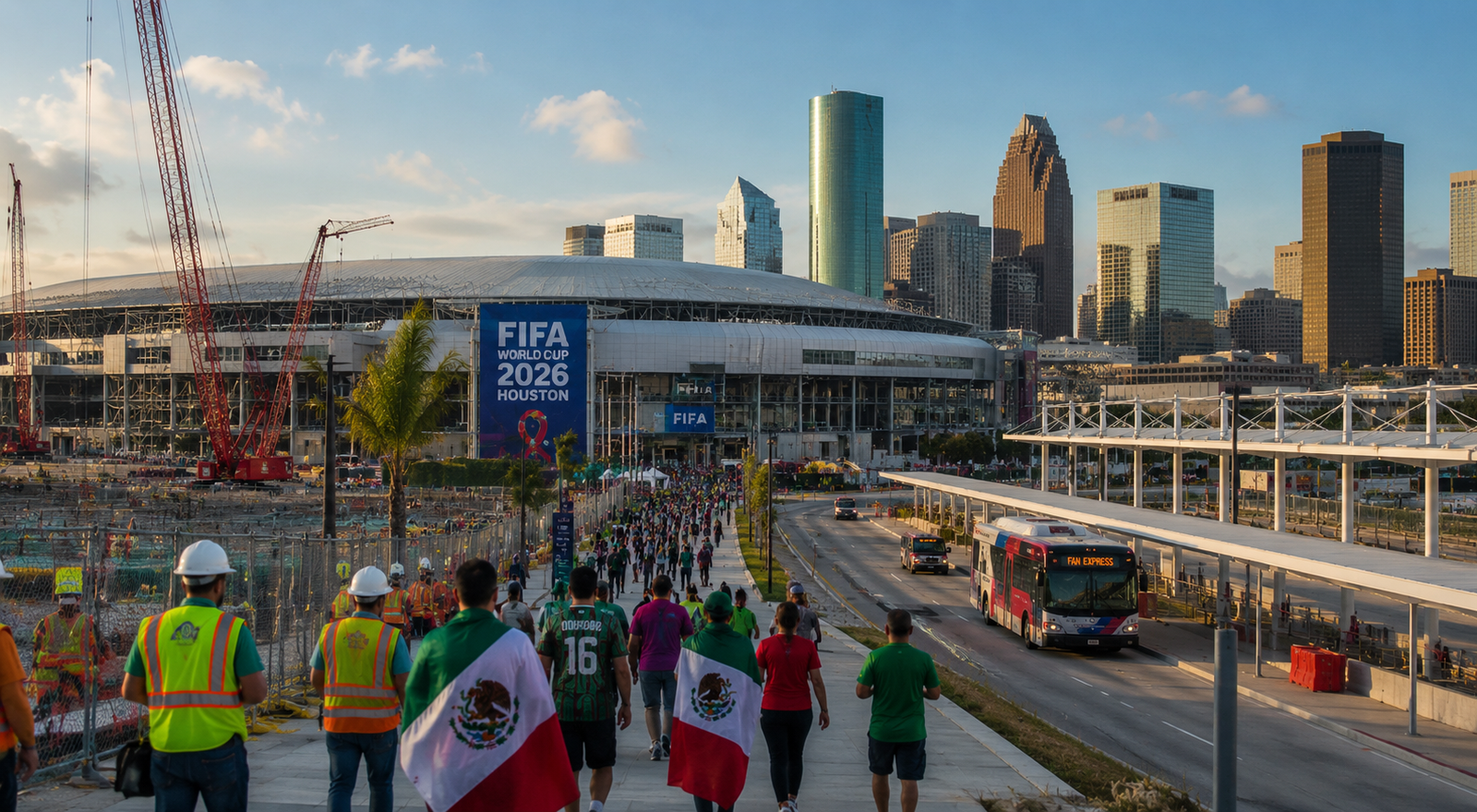
Hosting the World Cup is a huge responsibility for any city. Millions of football fans travel from around the world to watch matches, explore new destinations and experience the atmosphere of the tournament. To prepare for such a massive event, host cities must invest in transportation, stadiums, security and public services.
In this lesson, students will explore the challenges and opportunities of hosting the World Cup through an authentic news interview about Houston’s preparations for the 2026 FIFA World Cup. The activity develops listening comprehension, vocabulary acquisition and critical thinking skills while introducing learners to the infrastructure required for major sporting events.
This lesson is ideal for upper-intermediate and advanced English learners (B2–C1).
What Does Hosting the World Cup Involve?
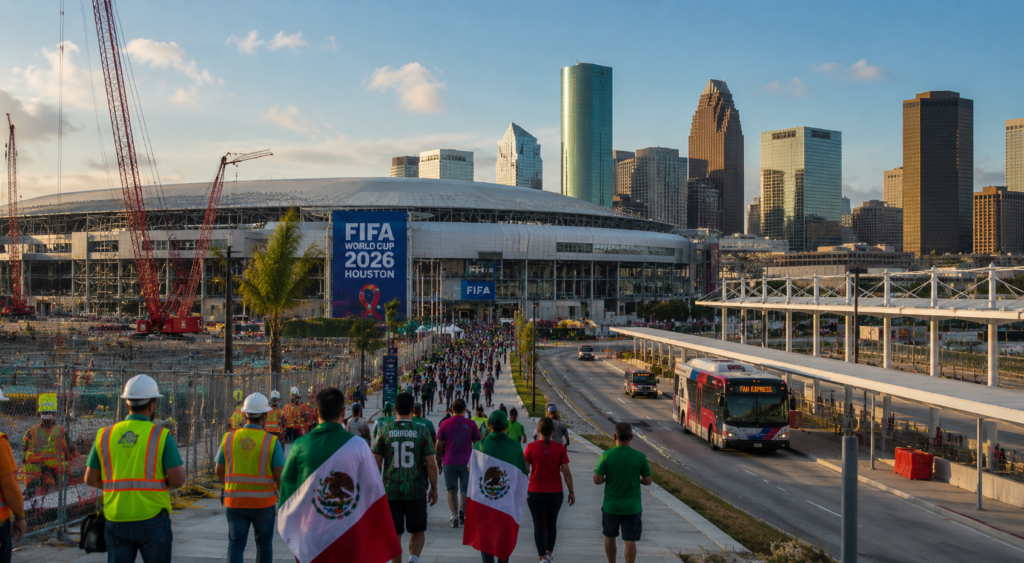
Preparing for the World Cup requires years of planning. Host cities must ensure that stadiums meet FIFA requirements, transportation networks can handle large crowds and security systems are ready for millions of visitors.
The tournament also creates opportunities for tourism, local businesses and international exposure. Successful host cities often benefit from increased global visibility and long-term economic activity.
➡ Read our broader lesson:
The Global Impact of the World Cup: ESL Listening Activities and Discussion Topics
Key Vocabulary for Hosting the World Cup
| Word | Meaning |
|---|---|
| Infrastructure | Systems and facilities needed for a city to operate |
| Stadium | A venue where sporting events take place |
| Transportation | Systems used to move people from one place to another |
| Logistics | Planning and organisation of complex operations |
| Economic Impact | Financial effects on a region or country |
| Visitors | People travelling to a location |
| Host City | A city selected to organise tournament matches |
| Security | Measures taken to protect people and property |
Hosting the World Cup Listening Activity
Before You Listen
Discuss these questions with a partner.
- Why do cities compete to host the World Cup?
- What challenges do host cities face?
- How can major sporting events affect local businesses?
- What types of infrastructure are necessary for large events?
- How important is public transportation during international tournaments?
Watch the interview about Houston’s preparations for the FIFA World Cup.
The interview explains how local authorities, businesses and event organisers are preparing for one of the largest sporting events in the world.
Hosting the World Cup Listening Practice
Activity 1 – Listening for Gist
Activity 2 – Listening for Details
Activity 3 – True or False
Activity 4 – Discussion and Critical Thinking
- Should governments invest public money in hosting sporting events?
- What are the biggest challenges of hosting the World Cup?
- How can cities benefit from international tourism?
- Are large sporting events worth the investment?
- How important is transportation during global events?
Infrastructure and Host Cities
Transportation Systems
One of the most important aspects of hosting the World Cup is ensuring efficient transportation. Millions of visitors need reliable ways to travel between airports, hotels and stadiums.
Stadium Requirements
FIFA imposes strict requirements on host stadiums. Some venues must undergo renovations or temporary modifications before matches can take place.
Security Planning
Large sporting events require extensive security planning. Host cities work with local, state and national authorities to ensure public safety.
➡ Explore another aspect of the tournament:
The Evolution of the World Cup Ball: Advanced English Listening Practice
Conclusion
Hosting the World Cup requires careful planning, significant investment and strong collaboration between governments, businesses and event organisers. Through this listening activity, students can improve their English skills while exploring how cities prepare for one of the world’s largest sporting events.
🎓 Join Our Free English Teaching Community
Would you like more ready-to-use classroom resources?
Join our free WhatsApp community to receive:
- ✅ Answer Keys
- ✅ Printable classroom materials
- ✅ New listening and dictation lessons
- ✅ Teaching ideas for B2–C2 learners
- ✅ Updates from MyEnglandBlog
👉 Join our free WhatsApp Community here: https://chat.whatsapp.com/Kfpriy6R30qDRntLEDsqH5?
FAQ
Why do cities want to host the World Cup?
Host cities benefit from tourism, international visibility and economic activity.
How long does World Cup preparation take?
Preparation often begins several years before the tournament.
What infrastructure is needed for the World Cup?
Transportation systems, stadiums, hotels, security services and public facilities.
How does the World Cup affect local businesses?
Hotels, restaurants and tourism-related businesses often experience increased demand.
Why is hosting the World Cup a good ESL topic?
It combines real-world issues, authentic listening practice and critical thinking discussions.



1 thought on “Hosting the World Cup: ESL Listening Activities About Cities and Infrastructure (B2–C1)”