Introduction
Starting to learn a new language can seem daunting. You might not know where to begin or how to get better. The key is to focus on four main skills that work together.
These skills are the basics of good communication. They are crucial whether you’re learning for travel, work, study, or personal reasons. Each skill is important for you to understand and express yourself confidently in everyday life.
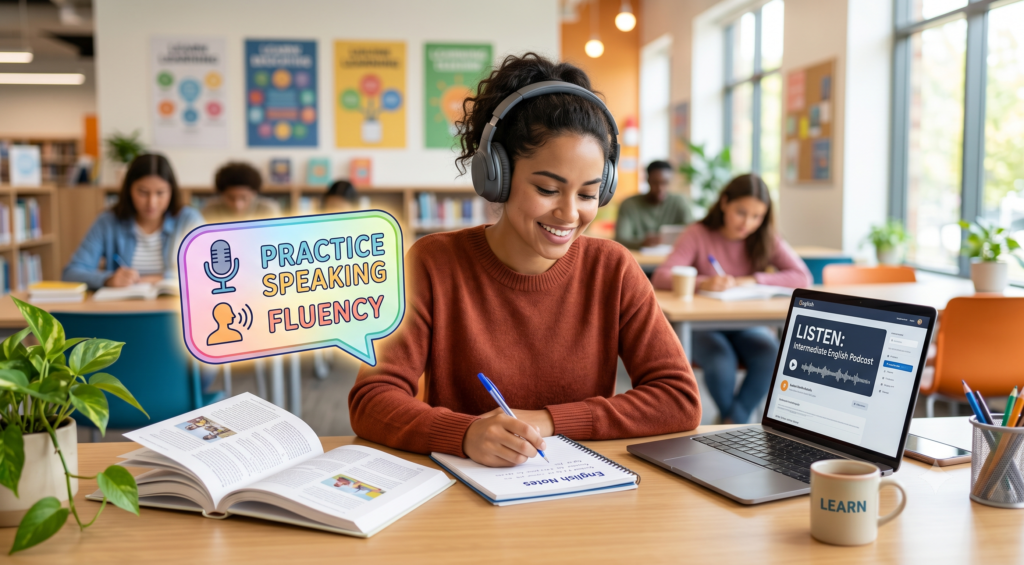
This guide will help you understand each skill with useful tips and advice. You’ll see how listening, speaking, reading, and writing are linked. Strengthening these skills can greatly improve your language use, no matter your current level.
Key Takeaways
- Mastering a language requires developing four essential abilities that work together harmoniously
- These core competencies form the foundation for effective communication in any context
- Listening, speaking, reading, and writing are interconnected and support each other
- Every learner can improve their proficiency regardless of their starting level
- Understanding these fundamental areas helps you focus your learning efforts strategically
- Practical development of these abilities leads to confident, real-world language use
What Are Skills in English?
Learning English is more than just memorising words and rules. It’s about gaining real communication skills. These skills are the English language skills that help you use the language every day.
Knowing what these skills mean can help you learn better. Let’s look at the key parts of English communication.
English language skills focus on effective communication, not just grammar or vocabulary.
The Four Core Communication Skills
There are four essential skills for English learners: Listening, Speaking, Reading, and Writing. These are key to good communication.
Each skill supports the others, forming a framework for mastering English.
1. Listening Skills in English
Before you can speak, read, or write in English, you must first train your ears to understand the language around you. Listening is the very first ability we develop as children learning our native tongue. The same principle applies when you begin learning English as a second language.
When you strengthen your listening comprehension, you naturally improve every other aspect of your English studies. This makes it an essential starting point for Brazilian learners. Visit our category about Listening Skills.
Why Listening Is the Foundation of Communication
Strong english listening skills help you absorb the rhythm, pronunciation, and flow of the language, showing how words connect in conversations before you can produce these sounds.
Active listening allows you to pick up vocabulary in context, recognising how English speakers express ideas, not just what they say.
Recognising Different Accents and Speeds
English sounds quite different depending on whether you’re hearing British, American, Australian, or other varieties. Native speakers also tend to talk quickly, blending words together in ways that challenge learners. These variations become easier to understand with consistent exposure and practice.
When you develop solid english listening skills, you gain several important advantages:
- Better pronunciation: You hear correct sounds and can reproduce them more accurately
- Improved vocabulary acquisition: You learn new words naturally within context
- Increased confidence: Understanding conversations makes you feel more comfortable speaking
- Enhanced comprehension: You can follow instructions, lectures, and media content with greater ease
Common Listening Challenges for Learners
You can strengthen your english listening skills through activities like watching English series with subtitles, listening to learner podcasts, or using language apps with audio exercises. These methods train your ear, enhancing comprehension.
2. Speaking Skills in English
For many English learners, speaking is the most rewarding challenge. It’s the most visible way to show your progress. You can join in conversations, share your thoughts, and connect with people worldwide.
The Importance of English Speaking Skills
Having strong english speaking skills lets you communicate in many situations. Whether you’re ordering food or making new friends, speaking boosts your confidence. It’s not about perfect grammar but making yourself understood.
Speaking regularly helps reduce anxiety. The more you speak, the more comfortable you get. Each conversation builds your courage to use English in real-life situations.
Good speaking means organising your thoughts and choosing the right words. Even with imperfect pronunciation, you can still get your message across. The goal is to make your message clear to others.
Essential Elements of Good Speaking
Developing english speaking skills involves several key components:
- Pronunciation: Being clear enough for others to understand you
- Fluency: Speaking smoothly without too many pauses or hesitations
- Vocabulary: Having the right words to express your ideas
- Grammar: Structuring sentences correctly to convey meaning
- Confidence: Willingness to try despite making occasional mistakes
Overcoming the Fear of Speaking
Many Brazilian learners worry about mistakes or accents. Remember, mistakes are part of learning. Native speakers value your effort and focus on understanding your message.
Try practical strategies to build confidence. Practise with language partners, record yourself, and join online groups for support.
The key is to start speaking, even if uncomfortable. Every conversation improves your skills and brings you closer to fluency. Visit our category Speaking Skills.
3. Reading Skills in English
Reading in English lets learners explore knowledge on their own. It’s a skill you can practice anywhere, anytime. You don’t need a teacher or someone to talk to.
It opens up endless resources and changes how you connect with the language.
Why Reading Skills Matter for Language Learning
English reading skills let you access information, enjoy books, and understand written instructions. Reading is a tool for learning and a practical skill for school, work, and daily life.
Strong reading skills make you an independent learner. You can learn about topics you’re interested in, like news or novels, at your own pace.
Reading helps you learn sentence structures, verb tenses, and word order naturally. You don’t need to study grammar rules when you read regularly. Your brain gets used to patterns, making grammar feel natural.
There are many reading materials for different levels and purposes. Here are some options for effective reading practice:
- Graded readers – Books for beginners with controlled vocabulary
- News articles – Current events for intermediate learners
- Novels and fiction – Stories for advanced students
- Blog posts and social media – Informal English
- Professional documents – Emails, reports, and business materials
Reading aloud combines reading and speaking. It strengthens pronunciation and reinforces written patterns.
Even 15 minutes of daily reading can make a big difference. The key is to be consistent, not perfect. Start with topics you love, and your reading skills will grow naturally over time. Visit our category Reading Skills.
4. Writing Skills in English
Learning to write well in English opens up many doors. At first, writing might seem hard, but it’s a skill you use every day. You’ll need it for emails, texts, social media, and reports.
Having strong english writing skills lets you communicate clearly in many ways. Unlike speaking, writing lets you think and revise before sharing. This makes it easier to share complex ideas.
In today’s world, being able to write well is key. You’ll use writing for everything from casual chats to important work documents.
Professional and Academic Benefits
Good writing skills can lead to better jobs and higher grades.
Writing helps you arrange ideas and present information clearly. It teaches you to build arguments and connect ideas. These skills also improve your speaking and thinking.
You’ll come across different writing styles as you learn. Each style has its own purpose and rules.
| Writing Type | Examples | Key Features | Common Uses |
|---|---|---|---|
| Informal Writing | Text messages, social media posts, personal emails | Casual tone, contractions, conversational style | Friends, family, casual online interactions |
| Formal Writing | Business emails, letters, reports | Professional tone, complete sentences, proper structure | Workplace communication, official correspondence |
| Academic Writing | Essays, research papers, assignments | Objective tone, evidence-based, citations | Schools, universities, scholarly publications |
| Creative Writing | Stories, blog posts, personal narratives | Expressive language, descriptive details, storytelling | Personal projects, entertainment, self-expression |
Knowing these styles helps you write better for each situation. All types need practice in grammar, vocabulary, and sentence structure.
Writing regularly makes it easier. Start with simple tasks in your daily life. A few sentences daily can make a difference.
Keep a daily journal in English. Write short paragraphs about your day or feelings. Comment on social media for informal practice.
Grammar-checking tools give valuable feedback as you improve. They help spot mistakes and learn grammar.
Start with small goals and gradually increase challenges. Focus on progress, not perfection. Even native speakers work on their writing skills all their lives. Visit our category Writing Skills.
How the Four Skills Work Together
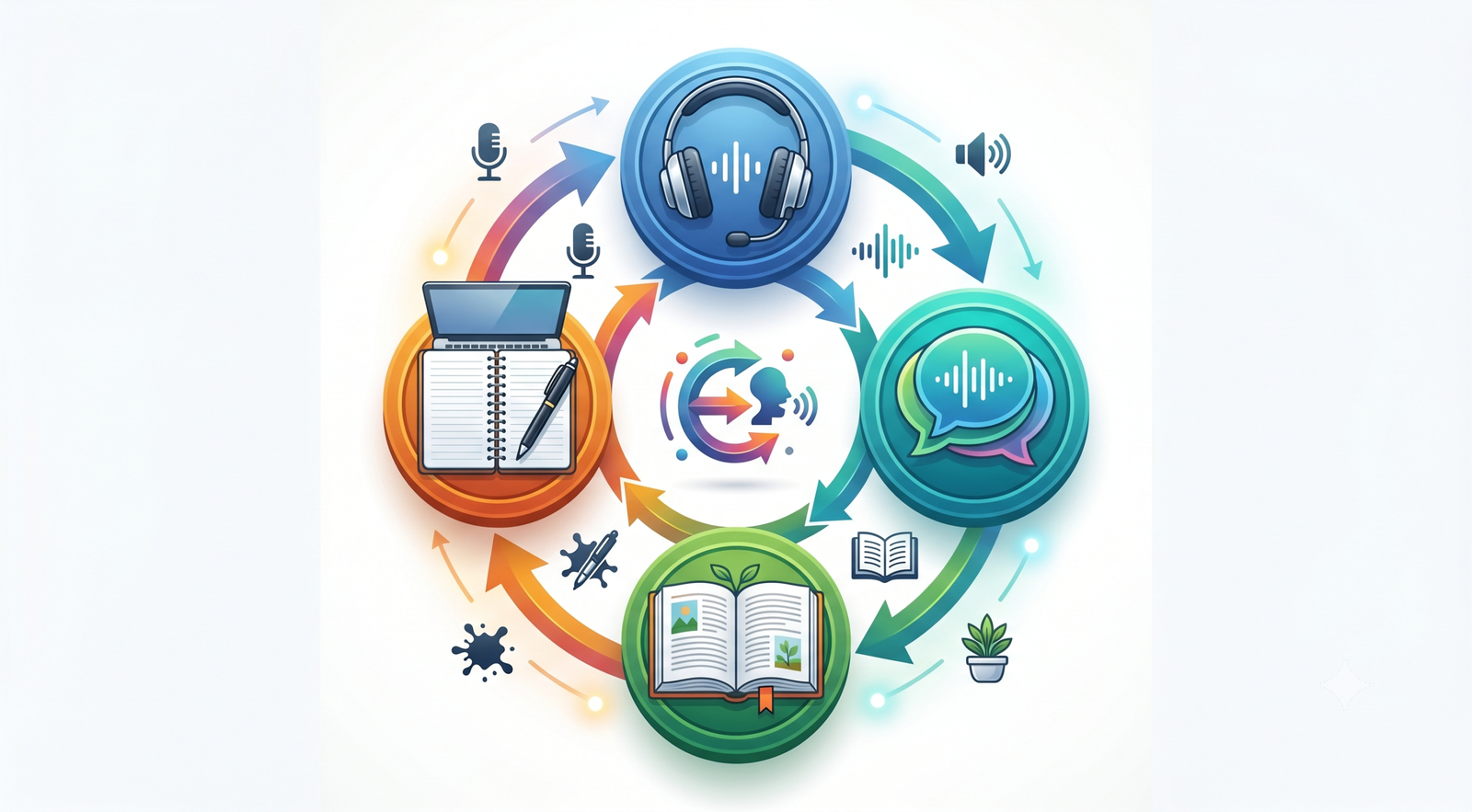
Learning English is more fun when you see how the four key skills work together. Instead of seeing listening, speaking, reading, and writing as separate, understanding their connection helps you learn English naturally. Each skill helps the others in important ways.
Receptive Skills: Listening and Reading
Listening and reading are called receptive skills because you get and understand information from others. You need to know vocabulary, grammar, and follow ideas. These skills are the base for communication.

Productive Skills: Speaking and Writing
Speaking and writing are productive skills because you create your own language. You need to remember words, use grammar, and arrange ideas well. These skills are harder because you have to make language yourself, not just understand it.
The Integrated Approach to Language Learning
The best way to learn is using many skills together. Watch a movie and discuss it. Read an article and summarize. Listen to a podcast and note the main points.
Real-life communication uses many skills. Talking involves listening. Researching means reading and writing. Look for activities that mix skills, not just one.
Practical Ways to Improve Your English Skills
Improving your English can be done through daily activities and smart learning choices. It’s more effective to practice regularly than to study intensely now and then. Even just 15 to 30 minutes a day can lead to better results than longer, less frequent sessions.
To build strong communication skills in english, you need a strategic plan. This plan should cover all four language areas. Here are some practical methods to help you create routines that fit your schedule and learning style.
Daily Practice Strategies for Each Skill
Developing habits for each language skill ensures balanced growth. Regular practice boosts your confidence and reinforces learning naturally over time.
Listening Practice Activities
Improving your listening skills is easier with these accessible options:
- Listen to English podcasts during your daily commute or exercise routine
- Watch YouTube videos or Netflix series with English subtitles first, then without
- Use language learning apps with dedicated listening exercises
- Listen to English music and try understanding the lyrics
- Watch international news broadcasts in English
- Participate in online listening comprehension activities
Explore more listening resources to enhance your comprehension skills further.
Speaking Practice Methods
Building speaking confidence requires regular vocal practice, even when alone:
- Practise speaking aloud about your day or describe your surroundings
- Use language exchange apps to connect with conversation partners worldwide
- Record yourself speaking and listen back to identify improvement areas
- Read texts aloud to practise pronunciation and fluency
- Describe objects around you in English throughout the day
- Join online conversation clubs or speaking groups
- Think in English rather than translating from Portuguese
Discover additional speaking practice techniques to build your confidence.
Reading Practice Tips
Regular reading exposure expands vocabulary and reinforces grammar patterns naturally:
- Start with graded readers matched to your current proficiency level
- Read English news websites daily on topics that interest you
- Follow English blogs about your hobbies or professional interests
- Use bilingual books (Portuguese-English) as stepping stones
- Join online English book clubs for motivation and discussion
- Read social media posts and comments from English speakers
- Gradually increase text difficulty as your skills develop
Find more reading materials and strategies suited to your level.
Writing Practice Exercises
Writing regularly helps consolidate grammar knowledge and vocabulary:
- Keep a daily journal in English about your experiences and thoughts
- Write short summaries of articles or videos you consume
- Comment on English forums or social media in your areas of interest
- Write emails or messages to language exchange partners
- Practise describing photographs in writing with detailed observations
- Use writing prompts from educational websites for inspiration
- Try apps that provide automated feedback on your writing
Access comprehensive writing guides and exercises to refine your skills.
Which English Skill Should You Focus on First?
- Beginners → Listening + Reading
- Intermediate → Speaking + Listening
- Advanced → Writing + Speaking
Using Technology and Online Resources
Apps like Duolingo, Babbel, and Busuu offer structured courses. Online dictionaries and translation tools provide support for unfamiliar words.
YouTube channels for English instruction offer free lessons on various topics. Podcast apps give access to thousands of English-language programmes for different interests.
Grammar-checking tools like Grammarly help correct writing mistakes. Language exchange platforms connect you with native speakers learning Portuguese. Online tutoring platforms provide affordable instruction with qualified teachers. Educational sites like myeslfriends have many useful materials for leraners.
Creating a Balanced Study Routine
Structuring your practice time prevents burnout and ensures skill development. Instead of practicing everything daily, dedicate specific time slots to different skills weekly.
Consistency matters more than perfection in building communication skills in English.
Set realistic, specific goals rather than vague ones. Instead of “improve listening,” try “watch one 10-minute video daily without subtitles.” Specific targets provide clear direction and measurable progress.
| Skill Focus | Weekly Time Investment | Recommended Activities | Progress Indicators |
|---|---|---|---|
| Listening | 2-3 hours | Podcasts, videos, audio lessons | Understanding without subtitles |
| Speaking | 2-3 hours | Conversation partners, self-recording | Reduced hesitation, clearer pronunciation |
| Reading | 2-3 hours | Articles, books, online content | Reading speed, vocabulary recognition |
| Writing | 1-2 hours | Journaling, emails, social media | Fewer grammar errors, richer vocabulary |
Balance remains essential throughout your learning journey. Neglecting any skill creates communication gaps that limit your overall proficiency. With the right strategies and commitment, you can steadily improve english skills and achieve your language goals.
🎓 Join Our Free English Teaching Community
Would you like more ready-to-use classroom resources?
Join our free WhatsApp community to receive:
- ✅ Answer Keys
- ✅ Printable classroom materials
- ✅ New listening and dictation lessons
- ✅ Teaching ideas for B2–C2 learners
- ✅ Updates from MyEnglandBlog
👉 Join our free WhatsApp Community here: https://chat.whatsapp.com/Kfpriy6R30qDRntLEDsqH5?
Conclusion
Improving your English skills means focusing on all four main areas. Listening, Speaking, Reading, and Writing are like different parts of an orchestra. They all work together to make you better.
Your path to becoming fluent in English is unique. Some days will be easier than others. Keep practicing and be patient with yourself. The tips in this article will help you, whether you’re starting or improving your skills.
English skills can open many doors in education, work, and personal life. Every time you talk, read, or write, you build your confidence. Start small, stay regular, and celebrate your achievements.
Learning English is not just possible—it’s a great investment in yourself. Your hard work today will open doors for tomorrow.
FAQ
Which English skill is most important to learn first?
Listening is often seen as the foundation since we learn by hearing first. However, it’s best to develop all four skills together. This balanced approach ensures you don’t have gaps in your communication skills.
How long does it take to improve English skills?
The time it takes to improve English skills varies. It depends on your starting level, how often you practice, and your goals. You’ll see progress in 3-6 months, but becoming fluent takes years.Even small daily practice sessions help you improve over time.
Can I improve my English skills without a teacher?
Yes, you can! There are many resources for learning English on your own. Apps like Duolingo and YouTube channels are great for practice. But, a teacher can offer structured learning and feedback, speeding up your progress.
What’s the best way to practise speaking if I don’t know any English speakers?
There are many ways to improve your speaking skills without native speakers. Use apps like HelloTalk to find practice partners. Join online clubs or hire tutors for practice.Speaking to yourself, reading aloud, and recording yourself also help. These methods boost your confidence and fluency.
Are english reading skills and english writing skills less important than speaking and listening?
No, all four skills are equally important. Reading lets you access information and enjoy literature. Writing is crucial for emails and reports. Reading expands your vocabulary and grammar. Writing helps you organise your thoughts and improve your language.