Introduction
Red Card to Racism in Football: Advanced Listening Practice for English Learners (C1)
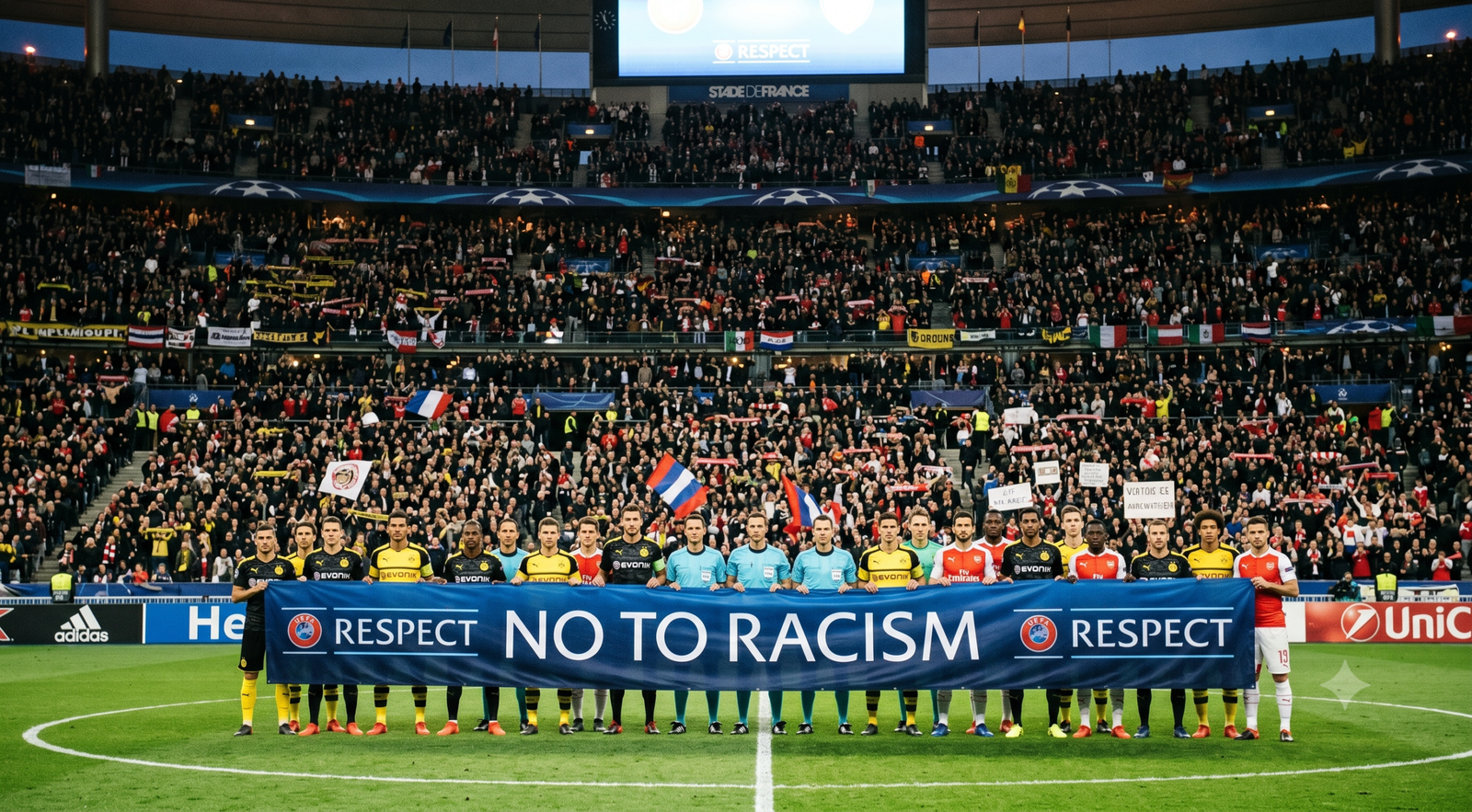
Red Card to Racism is more than a campaign slogan. It is a powerful message that highlights one of the most important challenges facing modern football. In this advanced listening lesson, you will explore authentic testimonies from football players who have experienced racism firsthand. Through real-world football listening practice, you will develop advanced listening skills, improve your understanding of authentic spoken English, and analyse how discrimination affects players both on and off the pitch. This lesson is designed for C1 learners who want to engage with meaningful topics while strengthening their listening comprehension.
Before You Listen
Activity 1. Prediction Questions
- Why do you think racism continues to exist in football despite anti-racism campaigns?
- How might racist abuse affect a player’s performance during a match?
- What actions should football clubs take when racism occurs?
Key Vocabulary
racial abuse
chanting
promotion
frustration
discrimination
inclusion
Listening Video
Watch the video below carefully.
Why this video is suitable for advanced learners?
This video contains authentic interviews with football players discussing their personal experiences of racism. Learners are exposed to natural speech, emotional language, real-life narratives, and a range of football-related vocabulary. It also develops the ability to understand opinions, attitudes, feelings, and implied meaning, all of which are essential C1 listening skills.
Listening for General Understanding
Activity 2. Listening for Gist
Watch from 0:00 to 1:00.
Activity 3. Listening for Details
Watch from 0:00 to 1:00.
Activity 4. Listening for Overall Meaning
Activity 5. True or False
Watch from 1:00 to 2:00.
Activity 6. True or False
Suggested H5P Type: True/False Question Set
Activity 7. Writing: Critical Listening
Watch from 1:14 to 1:54.
Answer the Questions.
- What specific behaviour did Effiong describe from the supporters?
- How did the crowd react after the incident?
- What physical reaction did he experience?
- Why do you think he found the situation difficult to process?
- What does his testimony reveal about the emotional impact of racism in sport?
Activity 8. Speaking Activity: Critical Listening
Short Answer
Question 1 – How did Effiong describe his immediate emotional reaction?
Question 2 – What effect did the abuse have on his performance?
Question 3 – Why is this testimony important for football audiences?
Activity 9. Listening for Inference
Watch from 1:00 to 2:00.
Activity 10. Speaking / Writing
Pause and Predict. Pause the video at 2:00.
Discuss with a partner or write your predictions.
- What type of experience do you think the next speaker will describe?
- Will the incident happen on the pitch or online?
- How might the player react emotionally?
- What action do you think the player will take after the incident?
Activity 11. Listening Focus: Renee Hector
Watch from 2:00 to 3:48.
Renee Hector, a former Tottenham Hotspur Women FC player, describes a racist incident she experienced during a match. Her testimony highlights how racism can occur both on the pitch and online, creating long-lasting emotional consequences.
Activity 12. True or False
Activity 13. Fill in the Blanks
Activity 14. Sequencing Task: Drag and Drop
Activity 15. Speaking – Short Answer Questions
- Why did Renee find the incident difficult to believe?
- How did speaking to her teammates affect her understanding of the situation?
- What role did social media play in her experience?
- Why can online abuse be especially damaging?
- What message does Renee’s testimony send to football organisations?
Activity 16. Advanced C1 Listening: Understanding Attitude and Meaning
Choose the best answer.
Activity 17. Writing
Write your answers.
- How do you think the public reacted to Renee’s tweet?
- What kinds of comments might she have received online?
- Do you think social media helps or harms anti-racism campaigns? Why?
- What actions should football authorities take after incidents like this?
Activity 18. Post-Listening Match Summary
Complete the summary using your own words.
The video presents powerful testimonies from football players who experienced racism during their careers. Marvin Sordell explains how racism affected his mental health and contributed to his retirement. Inih Effiong describes racist gestures and abuse from supporters during a match. Renee Hector shares her experience of racism on the pitch and the online abuse that followed. Together, these stories highlight the need for stronger action against discrimination in football.
Activity 19. Vocabulary Reuse Task (SPEAKING)
Use the following words in complete sentences. Example: Football organisations must promote inclusion at every level of the game.
racial abuse
frustration
discrimination
inclusion
chanting
Activity 20. Discussion Questions (Talk with a partner or with your teacher)
- Why do you think racism still exists in modern football?
- Should clubs receive stronger punishments when supporters engage in racist behaviour?
- How can players, clubs and fans work together to combat discrimination?
- Is social media helping or worsening the problem of racism in sport?
- What role should education play in promoting inclusion?
Activity 21. Writing – Critical Thinking Task (C1)
Write 150–200 words.
“Football has the power to unite people from different backgrounds, but racism continues to be a serious problem.”
To what extent do you agree with this statement?
Support your answer with examples from the video and your own ideas.

Conclusion
Authentic listening materials help learners develop much more than language skills. This lesson exposed you to real experiences, natural speech patterns and complex social issues through football. By engaging with genuine player testimonies, you have practised advanced listening skills while exploring an important topic that affects players, clubs and supporters worldwide. Continue using authentic football content to strengthen your comprehension, vocabulary and critical thinking in real-world English contexts with our other article about the Global Impacts of the World Cup.
🎓 Join Our Free English Teaching Community
Would you like more ready-to-use classroom resources?
Join our free WhatsApp community to receive:
- ✅ Answer Keys
- ✅ Printable classroom materials
- ✅ New listening and dictation lessons
- ✅ Teaching ideas for B2–C2 learners
- ✅ Updates from MyEnglandBlog
👉 Join our free WhatsApp Community here: https://chat.whatsapp.com/Kfpriy6R30qDRntLEDsqH5?
FAQ
Why is racism still a problem in football today?
Racism remains a challenge in football due to a combination of social, cultural and historical factors. Despite campaigns and regulations, incidents continue to occur at both amateur and professional levels.
What are the most famous anti-racism campaigns in football?
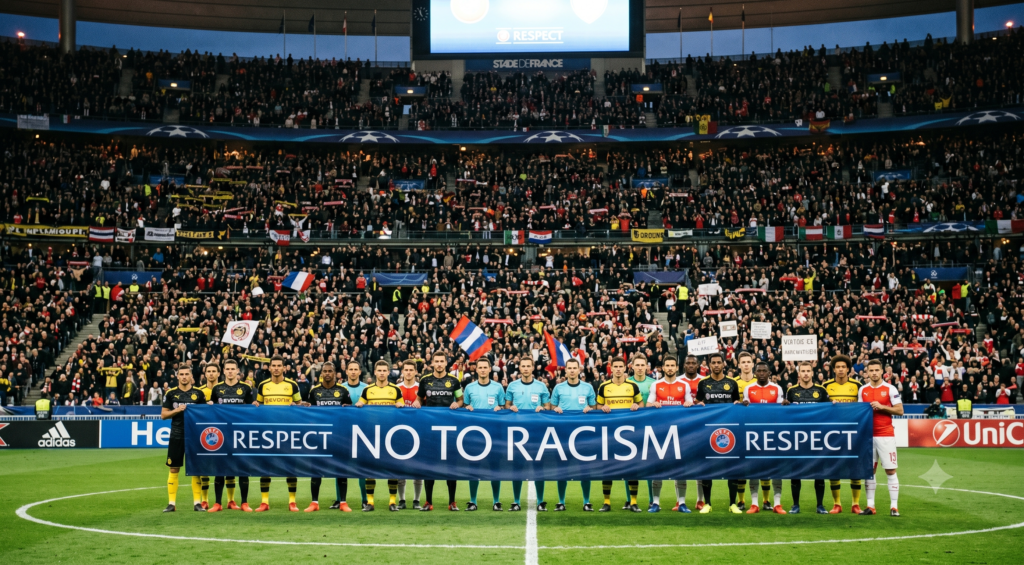
Some of the best-known initiatives include Kick It Out, No Room For Racism, Show Racism the Red Card and UEFA’s Respect campaign. These programmes aim to promote equality and inclusion across the sport.
Which football players have spoken publicly about racism?
Many players have shared their experiences, including Marcus Rashford, Vinícius Júnior, Raheem Sterling, Romelu Lukaku and Thierry Henry. Their testimonies have helped raise awareness worldwide.
How does social media influence racism in sport?
Social media can help spread awareness and support anti-racism movements, but it can also be used to spread abuse and discrimination. This dual role makes it an important topic in modern football.
What actions can football organisations take to combat racism?
Football authorities can implement stricter sanctions, improve education programmes, support victims, monitor online abuse and promote diversity initiatives throughout the sport.