Introduction
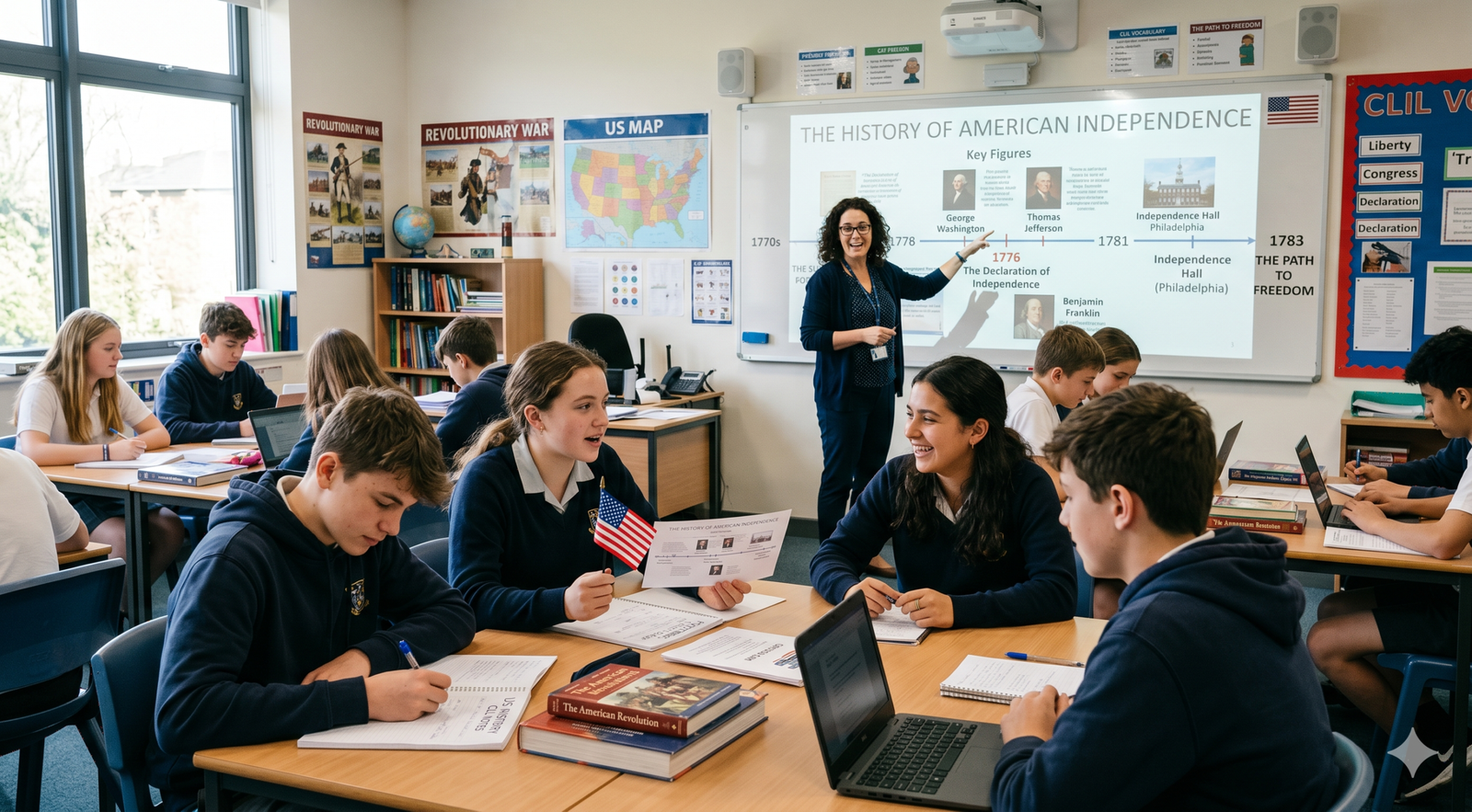
Looking for an engaging way to combine history and English language learning? This Independence Day Fourth of July CLIL Lesson helps B2 students explore one of the most important events in American history while developing their listening, reading, speaking and critical thinking skills.
Through a short historical video, interactive activities and discussion tasks, learners will discover the origins of Independence Day, understand the significance of the Declaration of Independence and reflect on how national celebrations shape a country’s identity. This lesson is ideal for secondary students and can be used in both traditional and CLIL classrooms.
Level: B2
Subject: History (CLIL)
Focus Keyword: Independence Day Fourth of July
Grammar Topic: Past Simple & Passive Voice
Watch and Learn
Video:
Before watching, discuss:
- What do you already know about the Fourth of July?
- Why do countries celebrate independence?
- What symbols are usually associated with national celebrations?
Watch the video and complete the activities below.
Understanding Independence Day
Listen and practice your pronunciation.
The Fourth of July, also known as Independence Day, is one of the most important national holidays in the United States. It commemorates the adoption of the Declaration of Independence on 4 July 1776, when the thirteen American colonies formally declared their separation from Great Britain.
Although many people associate the holiday with fireworks, barbecues and family gatherings, its historical significance goes much deeper. The Declaration of Independence represented a major political change and introduced ideas about liberty, democracy and self-government.
According to historians, the decision to separate from Britain was agreed upon on 2 July 1776, but the official document was approved and dated 4 July. Over time, that date became the symbol of American independence.
Today, Independence Day continues to encourage reflection on national identity, freedom and the historical events that shaped the United States.
True or False
Multiple Choice
Fill in the Blanks
Drag and Drop (Matching)
Critical Thinking
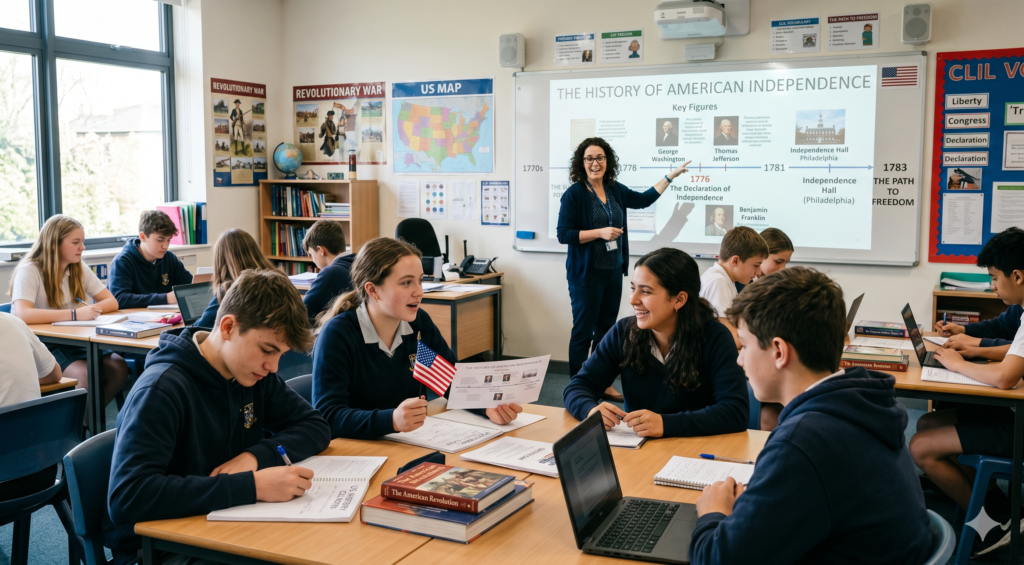
The historian in the video explains that Americans have experienced periods of unity and division throughout history.
Consider:
- Why do national celebrations remain important today?
- Can historical events help unite people?
- How does a country’s history influence its identity?
Write a short paragraph expressing your opinion.
Reading Comprehension
Independence Day and National Identity
For many Americans, Independence Day is more than a public holiday. It is an opportunity to reflect on the nation’s history and values. The Fourth of July commemorates the adoption of the Declaration of Independence in 1776, a document that changed the course of American history.
Over the centuries, the holiday has evolved. While fireworks, parades and family gatherings remain popular traditions, many people also use the occasion to think about freedom, democracy and civic responsibility.
Historians often point out that Independence Day has taken on different meanings during different periods of American history. During times of national crisis, such as wars or major challenges, the holiday has often served as a reminder of shared values and common goals.
Today, Independence Day continues to encourage discussions about the past, present and future of the United States, making it both a celebration and a moment of reflection.
Reading Comprehension Questions
Speaking Activities
Discussion Questions
- Why do you think countries celebrate independence days?
- Do national holidays help strengthen a country’s identity? Why or why not?
- Which historical event is considered important in your country, and why?
Pair Work Activity
Student A and Student B discuss:
“Should historical celebrations focus more on remembering the past or on bringing people together today?”
Use examples from the text and your own experiences to support your ideas.
Mini Presentation
Prepare a one-minute presentation answering:
“What can modern societies learn from historical events such as Independence Day?”
Try to include:
- one historical fact;
- one personal opinion;
- one example.
Conclusion
The Fourth of July remains one of the most significant dates in American history. Beyond the celebrations, it offers an opportunity to reflect on freedom, democracy and national identity. Through CLIL activities, students can develop both their English language skills and their understanding of important historical events.
🎓 Join Our Free English Teaching Community
Would you like more ready-to-use classroom resources?
Join our free WhatsApp community to receive:
- ✅ Answer Keys
- ✅ Printable classroom materials
- ✅ New listening and dictation lessons
- ✅ Teaching ideas for B2–C2 learners
- ✅ Updates from MyEnglandBlog
👉 Join our free WhatsApp Community here: https://chat.whatsapp.com/Kfpriy6R30qDRntLEDsqH5?
Frequently Asked Questions (FAQs)
1. What is the difference between Independence Day and the Fourth of July?
Independence Day is the official holiday that celebrates the adoption of the Declaration of Independence in 1776. The Fourth of July refers to the date on which the celebration takes place each year in the United States.
2. Why is Independence Day important in American history?
Independence Day marks the moment when the thirteen American colonies declared their separation from Great Britain. It is considered one of the most significant events in the history of the United States.
3. How is the Fourth of July celebrated in the United States?
Many Americans celebrate with fireworks, parades, concerts, family gatherings and community events. The holiday is also a time to reflect on freedom, democracy and national identity.
4. What is the Declaration of Independence?
The Declaration of Independence is a historic document adopted on 4 July 1776. It announced that the American colonies were no longer under British rule and would become independent states.
5. How can teachers use Independence Day to teach English?
Independence Day is an excellent topic for ESL and CLIL lessons because it combines history, culture, reading, listening, speaking and critical thinking. Students can explore authentic content while developing their English language skills.