Skip to content
segunda-feira, maio 18, 2026

myenglandblog.com

  • British English
    • slang & idioms
    • Grammar
    • Pronunciation and Accent Tips
  • Listening Practice
  • Reading Practice
site mode button

Categoria: Grammar

English Grammar

Learn English grammar through clear explanations, structured rules, and real usage in authentic British English contexts. This category helps learners move beyond memorisation and develop true grammatical accuracy across different CEFR levels, from A1 to C2.

All content is designed to connect grammar theory with practical communication, improving fluency, precision, and confidence in both speaking and writing.

What You Will Learn

In this category, you will build a complete understanding of English grammar, including:

  • Sentence structure and word order
  • Verb tenses (simple, continuous, perfect, and perfect continuous)
  • Modal verbs and their pragmatic use
  • Pronouns and reference systems
  • Relative clauses and sentence expansion
  • Agreement rules and common learner mistakes
  • Advanced structures for fluent communication

The focus is always on grammar in use, not isolated rules.

Grammar Across Levels (A1 to C2)

This category supports progressive learning:

  • A1–A2: basic sentence formation and essential grammar rules
  • B1–B2: expanded grammar structures and accuracy development
  • C1–C2: advanced fluency, nuance, and natural expression

Learners can gradually move from controlled practice to real-world mastery.

Core Grammar Topics (Featured Articles)

Explore structured grammar explanations and practice-based learning materials:

  • Advanced English Grammar: C2 Structures That Make You Sound Fluent
  • Modal Verbs Exercises: Master Polite, Diplomatic and Professional English C1–C2
  • Modal Verbs: Can – Grammar and British English Pronunciation
  • Relative Clauses Made Simple: Who, Which, That Explained Clearly (B1–B2)
  • This, That, These, Those? A Complete Guide with Exercises (A1–C1)
  • Reflexive Pronouns in English: How to Use Yourself and Other Forms Correctly
  • Indefinite Pronouns and Agreement: Everyone Is or Everyone Are?
  • Subject and Object Pronouns: I or Me? Common Mistakes Learners Make
  • Possessive Pronouns and Adjectives: My or Mine Explained Clearly 

 Why Learning Grammar Matters

Grammar is the foundation of accurate and effective communication. It allows learners to:

  • Express ideas clearly and logically
  • Avoid common mistakes in speaking and writing
  • Understand native English usage more deeply
  • Improve academic and professional communication
  • Achieve fluency with confidence and precision

Rather than memorising rules, learners develop grammar through context, repetition, and meaningful use.

Related Categories

You may also explore related learning areas:

  • Vocabulary (word formation, collocations, and lexical development)
  • Skills Practice (reading, listening, writing, and speaking)
  • British English (real usage, pronunciation, and expressions)
  • Pronunciation and Accent Tips (fluency and spoken accuracy)
  • Teacher Resources (lesson plans and classroom materials)

Improve your English accuracy and fluency by combining grammar rules with vocabulary expansion. Build your lexical knowledge in the English Vocabulary category.

Strong grammar knowledge becomes more powerful when applied through real communication tasks in the Skills Practice category.

Support for teachers is also available through structured lesson materials and classroom resources in the Teacher Resources category.

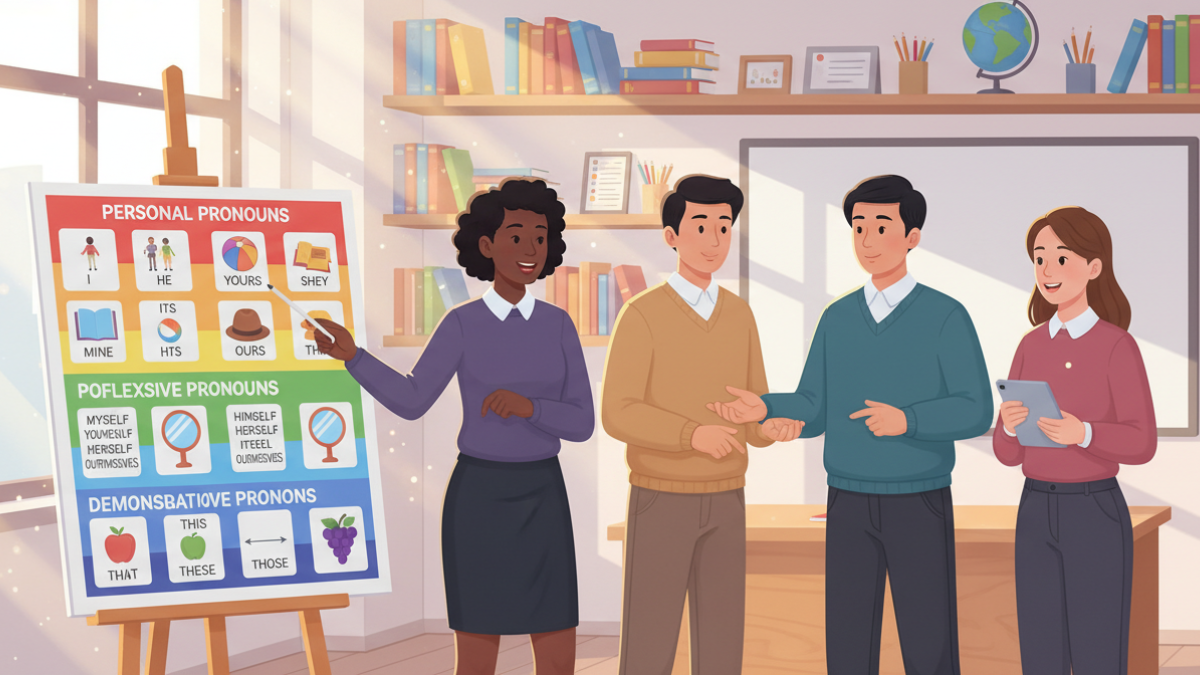
English Pronouns

English Pronouns: Complete Guide from Basic to Advanced (A1–C1)

fevereiro 26, 2026abril 2, 2026MyEnglandBlog5 comentários em English Pronouns: Complete Guide from Basic to Advanced (A1–C1)

Master English pronouns with clear explanations, practical examples and contextualised exercises. This guide explores subject and object pronouns, possessive forms, reflexive pronouns and common mistakes, helping learners build accuracy and confidence in spoken and written English.

Continue Reading

Navegação por posts

Publicações mais novas

Recent Posts

  • British English: Complete Guide to Grammar, Vocabulary, Pronunciation and Real Usage
  • Advanced English Tenses: When to Use Past Perfect vs Past Perfect Continuous
  • Advanced Texts in English: Reading Practice for C1–C2 Learners
  • Reading Exercises: Practical Ways to Improve Your English Reading Skills
  • Reading Comprehension: Why It Is Essential for Learning English A1-C1

Recent Comments

  1. Real English Conversation: Gonna, Wanna, Gotta Explained Simply - MyESLFriends em Modal Verbs: Can – Grammar and British English Pronunciation
  2. Inglês na Educação Infantil: Como montar um Projeto de Língua Inglesa na Escola Pública (Guia Prático com 18 temas essenciais) - MyESLFriends em Math Exercises in English A1–B1: Symbols, Shapes, and Problem Solving
  3. Advanced English Tenses: When to Use Past Perfect vs Past Perfect Continuous - myenglandblog.com em English Writing: A Complete Guide with Rules Examples and Practice Activities A1 to C1
  4. Advanced English Tenses: When to Use Past Perfect vs Past Perfect Continuous - myenglandblog.com em English Pronouns: Complete Guide from Basic to Advanced (A1–C1)
  5. MyEnglandBlog em Indefinite Pronouns and Agreement: Everyone Is or Everyone Are?

Archives

  • abril 2026
  • março 2026
  • fevereiro 2026
  • janeiro 2026
  • outubro 2025
  • setembro 2025
  • julho 2025

Categories

  • British English
  • English Through School Subjects
  • English Vocabulary
  • Grammar
  • Lesson Plans & Worksheets
  • Pronunciation and Accent Tips
  • Reading Practice
  • slang & idioms
  • Speaking Practice
  • Teacher Resources
  • Writing Practice
| Theme: News Portal by Mystery Themes.

WhatsApp us

We use cookies to ensure that we give you the best experience on our website. If you continue to use this site we will assume that you are happy with it.